
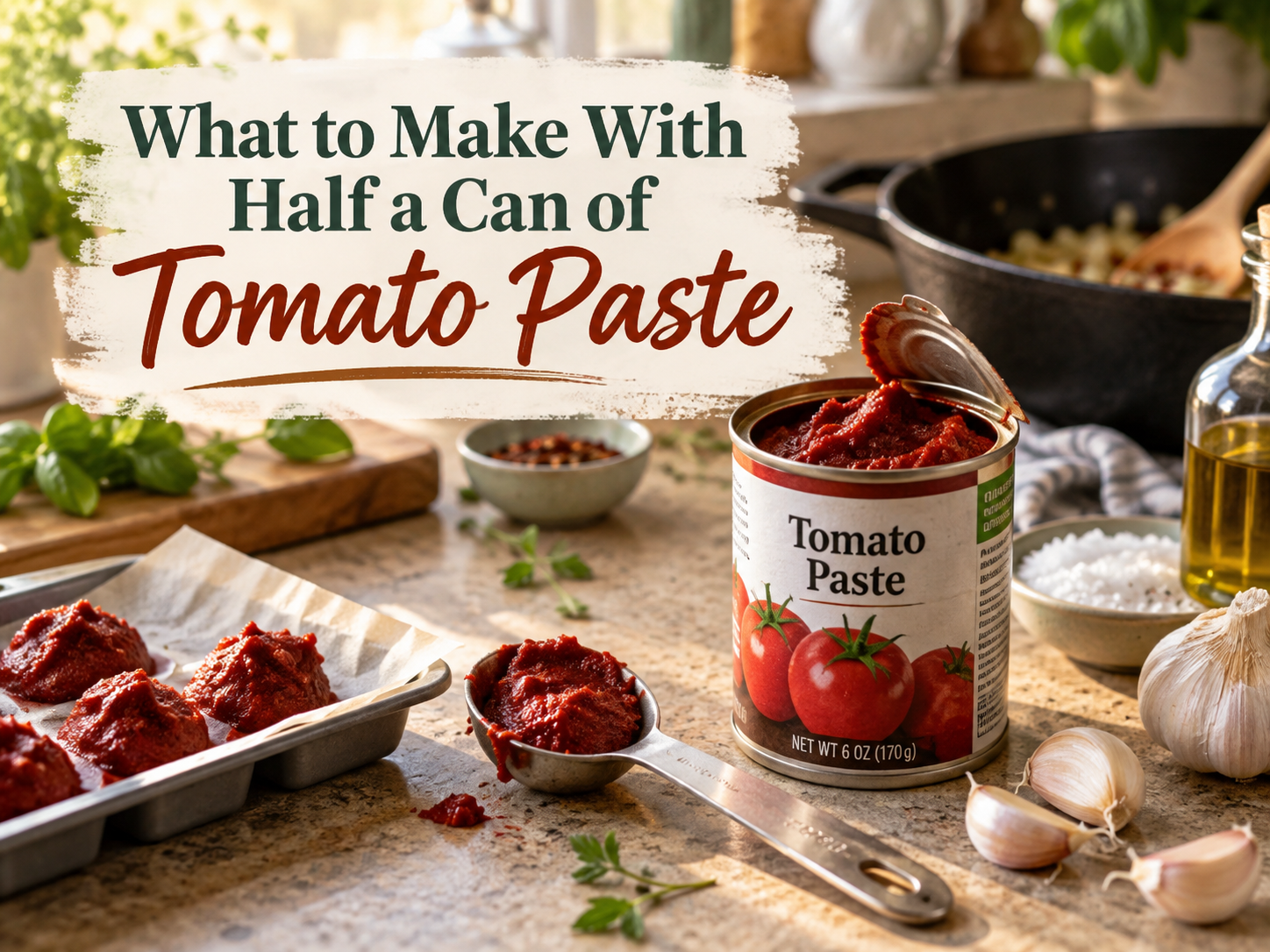
Welcome to Week 3 of The Use-It-Up Kitchen, where we take the small, awkward leftovers hiding in the fridge and give them a real job.
This week, we are talking about tomato paste.
Not tomato sauce. Not crushed tomatoes. Tomato paste. That thick little can you open because a recipe asks for one tablespoon, then you stare at the rest and think, “Well, now what?”
Most home cooks have been there. A recipe needs a spoonful of tomato paste for chili, soup, stew, pasta sauce, meatloaf, or curry. You open the can, scoop out what you need, and suddenly you have almost the whole can left. It feels too useful to throw away but too small to plan around.
So it goes into the refrigerator.
Then, maybe a week later, you find it. Maybe it has dried around the edges. Maybe it has a darker top. Maybe you are not sure when you opened it, which is never a great sign.
The good news is that tomato paste is one of the easiest ingredients to rescue if you act early. It freezes well, adds deep tomato flavor to quick meals, and can make weeknight cooking taste like it simmered longer than it did.
The trick is to stop treating it like a leftover and start treating it like a flavor tool.
The Problem: Tomato Paste Is Useful, But Recipes Rarely Use the Whole Can
Tomato paste is concentrated tomato. That is why a small amount can do so much. It brings body, color, acidity, and savory depth to sauces, soups, beans, rice dishes, braises, and skillet meals.
The problem is the packaging. Many small cans hold more paste than one recipe needs. If you only use a tablespoon or two, the rest becomes a storage problem.
You could leave it in the can with plastic wrap over the top. People do it. I understand why. But opened canned foods should be handled like perishable food once opened. Food Standards Australia advises transferring opened canned food to a clean plastic or glass container, covering it, and refrigerating it instead of leaving it in the opened can.
Tomato paste also does not need to sit in the refrigerator waiting for you to remember it. According to the USDA FoodKeeper guidance cited by Serious Eats, opened tomato paste keeps for about five days in the refrigerator and two to three months in the freezer for best quality.
That is the real answer for most homes: use a little now, freeze the rest on purpose.
The Rescue Principle: Bloom It, Blend It, or Freeze It
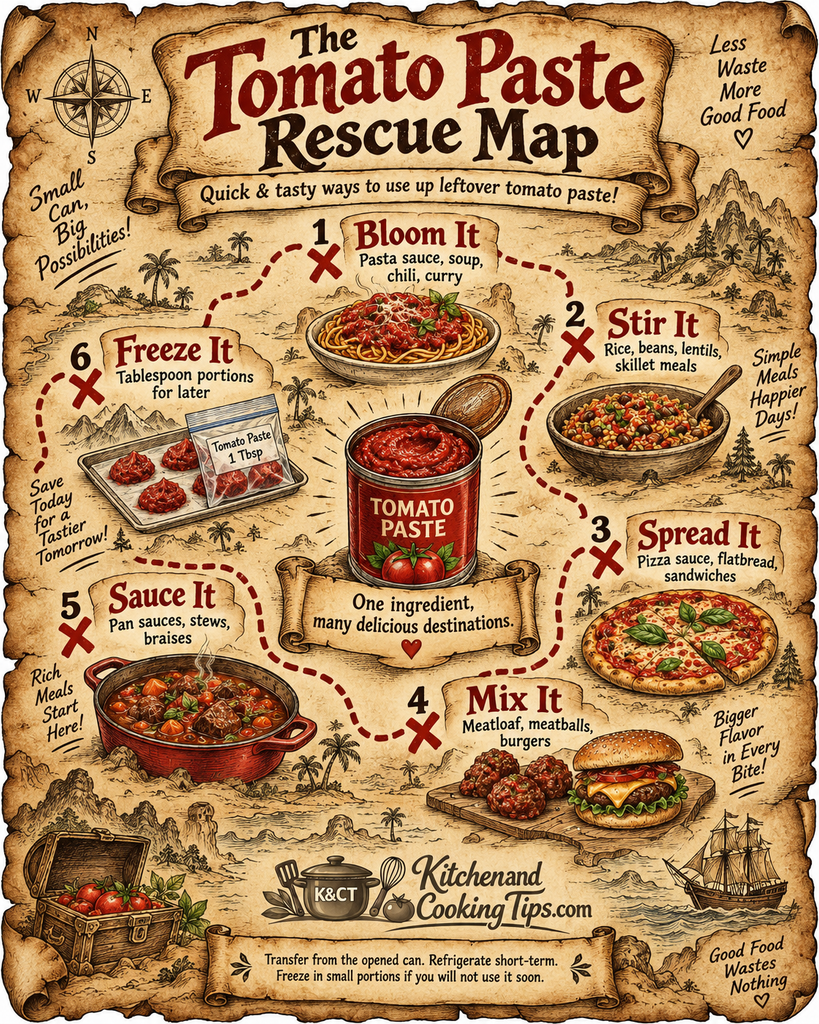
Tomato paste tastes better when it is cooked briefly in fat before liquid is added. This is sometimes called blooming or caramelizing the paste. You do not need to make it complicated. Just add the paste to a skillet with oil, butter, onions, garlic, spices, or vegetables, and let it cook for a minute or two.
At first, it may smell sharp and raw. After a little cooking, it darkens slightly and starts smelling richer. That small step makes a big difference. If you stir tomato paste straight into a watery soup without cooking it first, it can taste flat. If you cook it in the pot first, it blends into the dish and brings better flavor.
Tomato paste can also be blended into sauces, stirred into soups, mixed into rice, added to beans, or used as a base for quick pizza sauce.
And if you are not using it soon, freeze it in small portions. One tablespoon portions are the easiest. That way, the next time a recipe asks for a spoonful, you do not have to open a new can.
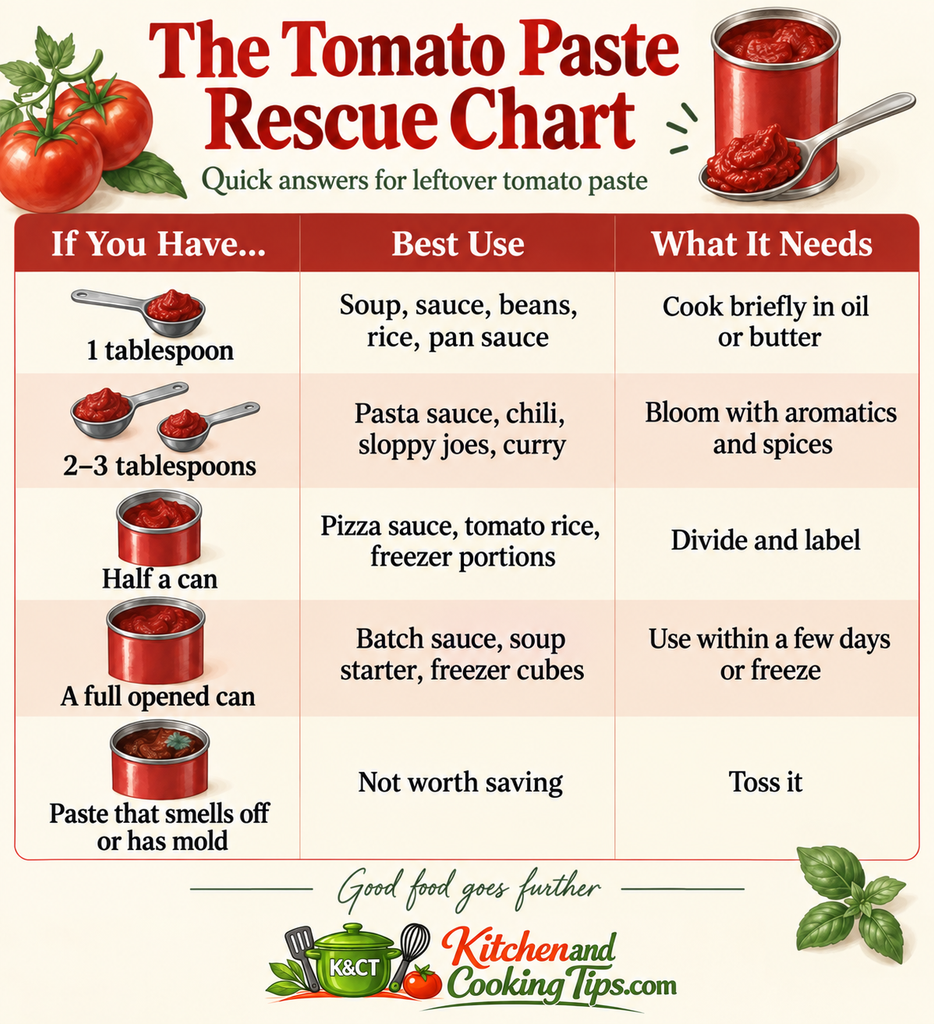
The Tomato Paste Rescue Chart
First, Store Tomato Paste the Right Way
Once the can is open, transfer the leftover tomato paste to a clean, covered container. A small glass jar works well. So does a food storage container.
If you know you will use it within a few days, refrigerate it. If you are not sure, freeze it. That is usually the smarter move.
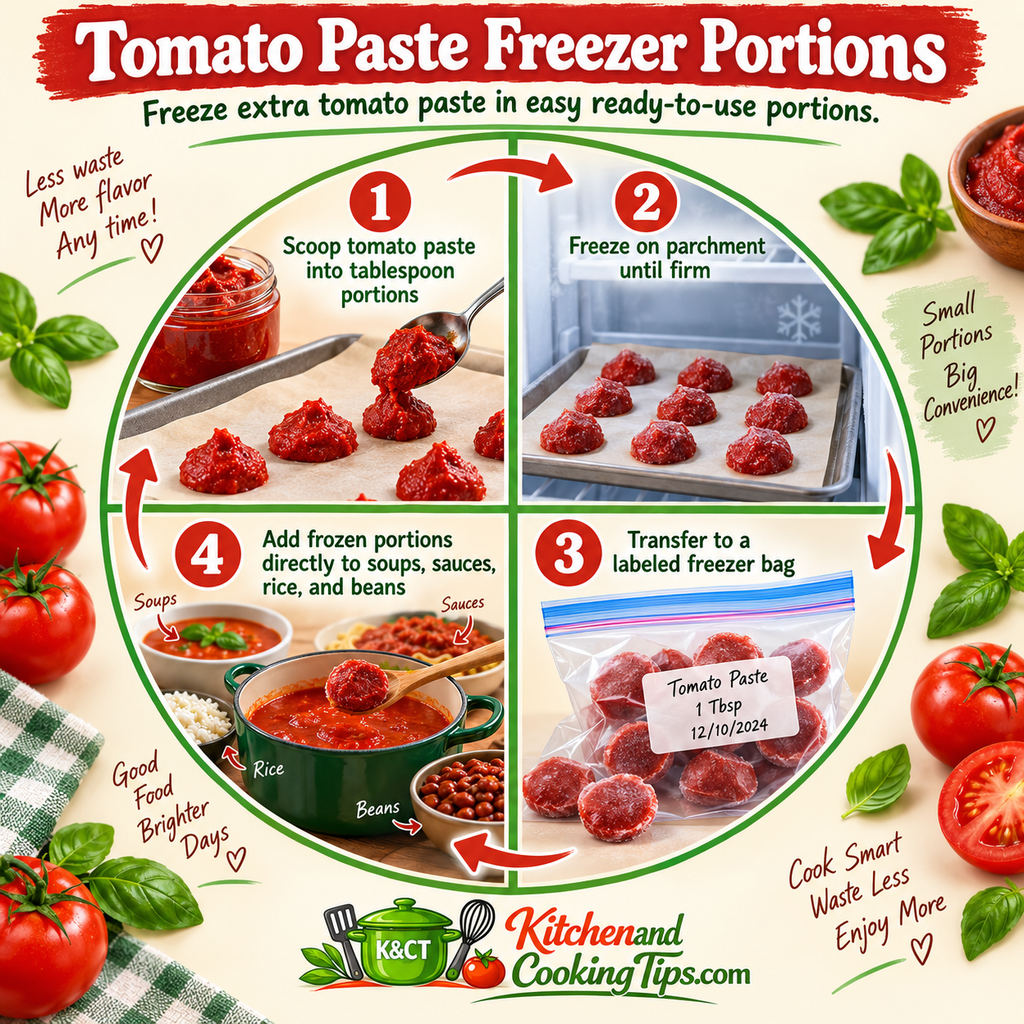
To freeze tomato paste, scoop it into tablespoon-sized portions on a parchment-lined plate or tray. Freeze until firm, then transfer the portions to a freezer bag. Label the bag with the date and the amount. You can also use an ice cube tray, but tablespoon scoops are easier to measure later.
When you need tomato paste, pull out one portion and add it straight to a hot pan. It melts quickly. No thawing drama required.
Kitchen Tip
Flattening tomato paste in a small freezer bag also works. Press it into a thin layer, freeze it flat, and break off a piece when you need it. It is not as exact as tablespoon portions, but it is fast.
Rescue Meal 1: Quick Pasta Sauce
Tomato paste can turn pantry ingredients into a fast pasta sauce.
Start with olive oil, garlic, and maybe a little onion. Add one or two tablespoons of tomato paste and cook it for a minute. Stir often so it does not scorch. Add crushed tomatoes, canned diced tomatoes, broth, pasta water, or even a splash of cream. Season with salt, pepper, basil, oregano, chili flakes, or Parmesan.
If you only have tomato paste and no canned tomatoes, you can still make a simple sauce. Use tomato paste, pasta water, olive oil, garlic, and a little butter. The pasta water loosens the paste and helps it cling to the noodles. It will not taste exactly like a long-simmered marinara, but it can absolutely save dinner.
This is also a good place to use tiny leftovers. A handful of spinach, a few mushrooms, leftover sausage, white beans, cooked chicken, or frozen peas can all go into the sauce.
Quick Tomato Paste Pasta Formula
| Ingredient | Amount for 2 Servings |
|---|---|
| Tomato paste | 1–2 tablespoons |
| Olive oil or butter | 1–2 tablespoons |
| Garlic | 1–2 cloves |
| Pasta water or broth | ½–1 cup |
| Cooked pasta | 6–8 ounces |
| Finish | Parmesan, herbs, chili flakes, lemon, cream |
Rescue Meal 2: Tomato Rice or Tomato Butter Rice
Tomato paste is a smart way to give plain rice more flavor.
If you have leftover rice, heat a little butter or oil in a skillet. Add tomato paste and cook it briefly. Stir in the rice, a splash of water or broth, and seasonings. Garlic powder, onion powder, cumin, paprika, oregano, or chili powder all work. Cover for a minute or two so the rice steams and softens.
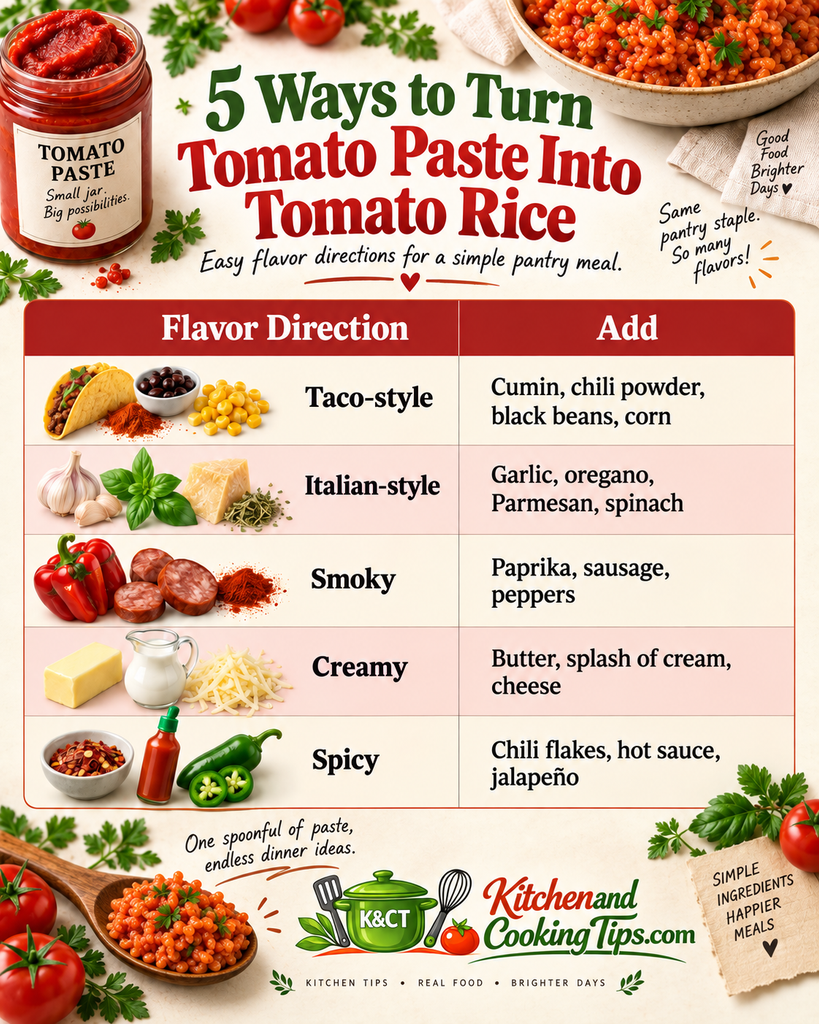
You can take this in several directions. Add black beans and corn for a taco-style rice bowl. Add peas and a fried egg for a quick lunch. Add cooked chicken and vegetables for a skillet meal. Add a little cream or cheese if you want something closer to a tomato risotto shortcut.
This is one of those meals that does not look like much until it comes together. Then suddenly the leftover rice and leftover tomato paste have both been handled.
Tomato Rice Flavor Paths
Rescue Meal 3: Soup Starter
Tomato paste belongs in soup because it adds body without requiring a long simmer.
For vegetable soup, cook onion, carrot, and celery in a little oil. Add tomato paste and stir until it darkens slightly. Then add broth, canned tomatoes if you have them, beans, pasta, rice, potatoes, or frozen vegetables.
For chicken soup, tomato paste can push the broth in a warmer, richer direction. For lentil soup, it adds depth. For beef stew, it helps build the base. For minestrone, it makes the broth taste more complete.
This is also a good way to use frozen tomato paste portions. Drop one into the pot after the vegetables soften. Stir until it melts, then add the liquid.
Kitchen Tip
Add tomato paste before the broth, not after. It needs contact with the hot pan to develop flavor. Once the pot is full of liquid, it can still dissolve, but it will not deepen in the same way.
Rescue Meal 4: Chili, Beans, and Lentils
Tomato paste and beans are a good match. The paste adds thickness and flavor, while the beans make the meal filling.
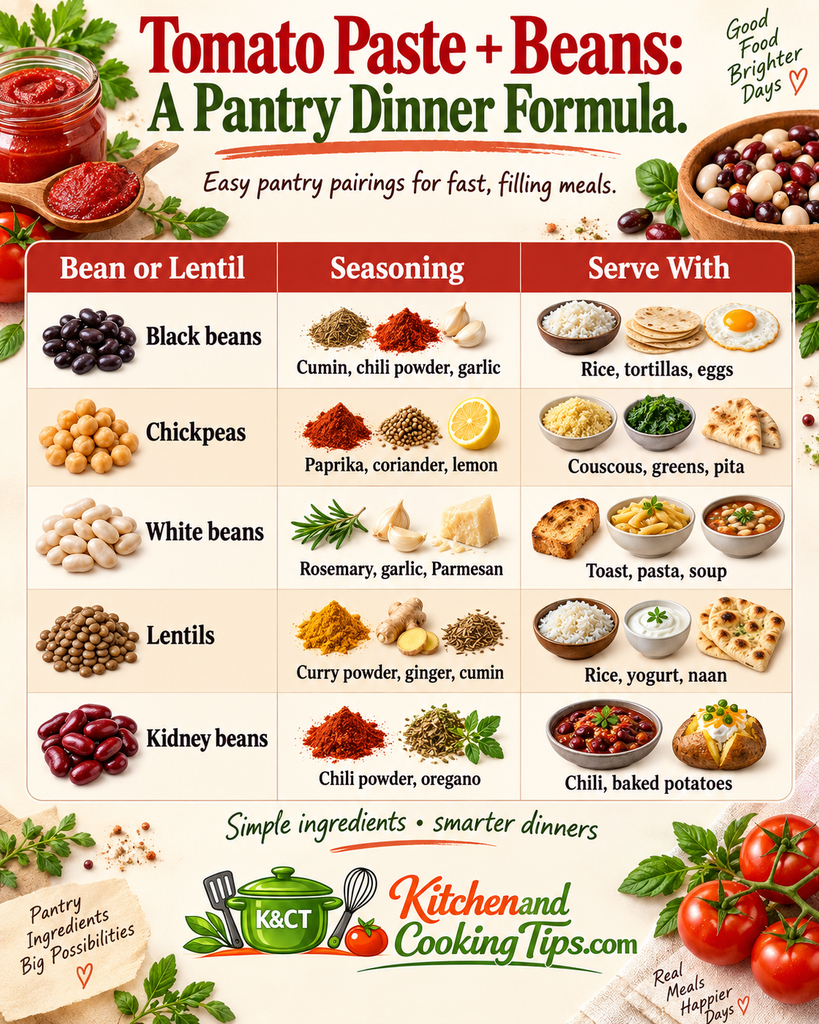
For a simple bean skillet, cook onion and garlic in oil. Add tomato paste, cumin, paprika, chili powder, or taco seasoning. Stir in canned beans with a splash of broth or water. Simmer until thick. Serve over rice, in tortillas, with eggs, or beside roasted vegetables.
For lentils, tomato paste works the same way. Add it after the aromatics and before the liquid. It gives the lentils a deeper base and helps the dish taste less plain.
For chili, tomato paste can make a quick pot taste more developed. You do not need a lot. Two tablespoons can help a pot of chili feel thicker and more balanced.
Bean and Tomato Paste Pairings
Rescue Meal 5: Quick Pizza Sauce
Tomato paste can become pizza sauce in about two minutes.
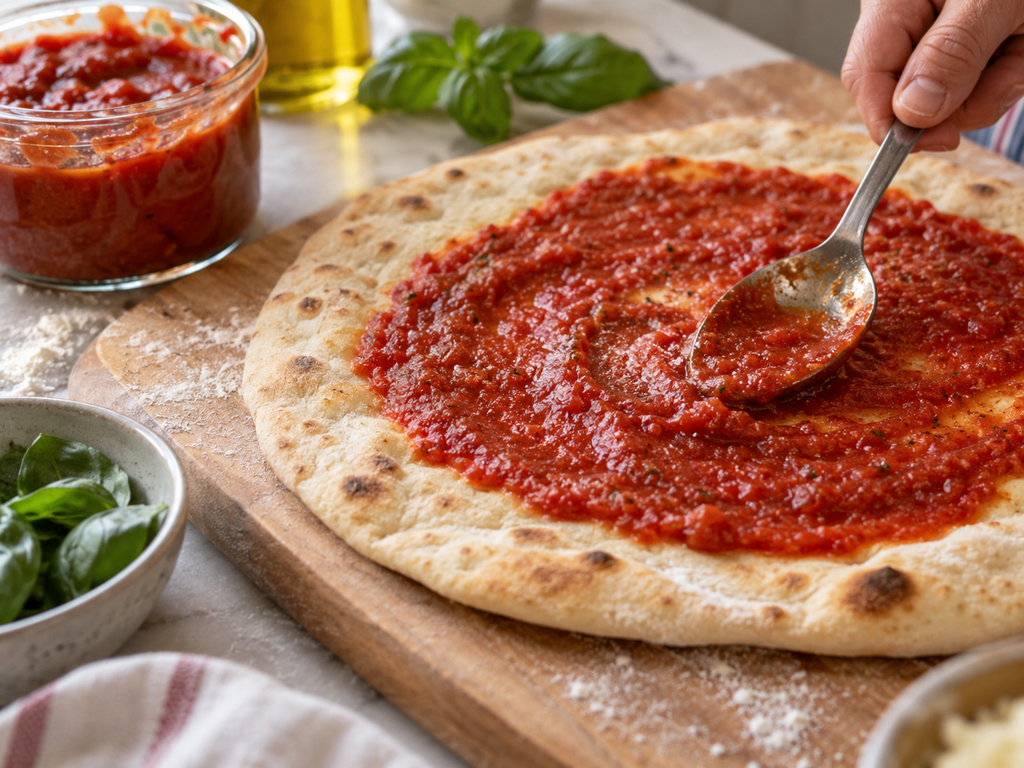
Stir tomato paste with a little olive oil, water, garlic powder, oregano, salt, pepper, and a pinch of sugar if it tastes too sharp. Spread it thinly on pizza dough, flatbread, English muffins, tortillas, or pita.
The key word is thinly. Tomato paste is concentrated, so a thick layer can taste heavy. Loosen it enough to spread, then use less than you think.
This is a great use for the last few spoonfuls in the can. It also makes a fast lunch if you have bread, cheese, and a few toppings.
Quick Pizza Sauce Formula
| Ingredient | Amount |
|---|---|
| Tomato paste | 2 tablespoons |
| Olive oil | 1 teaspoon |
| Water | 1–2 tablespoons |
| Garlic powder | ¼ teaspoon |
| Dried oregano | ¼ teaspoon |
| Salt | Pinch |
| Sugar | Pinch, optional |
Rescue Meal 6: Meatloaf, Meatballs, and Burgers
Tomato paste can add moisture and flavor to ground meat mixtures. It works in meatloaf, meatballs, turkey burgers, beef patties, and even plant-based lentil patties.
For meatloaf or meatballs, mix one or two tablespoons into the meat mixture with breadcrumbs, egg, seasoning, and onion. It helps bring a tomato note without making the mixture too wet. You can also stir tomato paste into a glaze with ketchup, mustard, brown sugar, or Worcestershire sauce.
For burgers, use less. Too much tomato paste can make the texture soft. A teaspoon or two mixed into turkey burgers with garlic and Italian seasoning can help the flavor, especially if the meat is lean.
This is not the flashiest use, but it is practical. And practical is the whole point.
Rescue Meal 7: Curry, Stew, and Braised Dishes
Tomato paste is common in dishes that need a rich base. It can support curry, beef stew, chicken stew, chickpea curry, braised cabbage, and slow-cooked sauces.
For curry, cook onion, garlic, ginger, and spices first. Add tomato paste and cook it briefly. Then add coconut milk, broth, chickpeas, chicken, vegetables, or lentils. The tomato paste helps round out the sauce.
For stew, add tomato paste after browning the meat and cooking the aromatics. Let it darken slightly before adding broth or wine. This small step gives the stew a stronger foundation.
For braised vegetables, use tomato paste with cabbage, green beans, eggplant, zucchini, or peppers. It adds body without needing a full can of tomatoes.
Stew and Curry Starter Chart
| Dish | Tomato Paste Amount | Liquid to Add |
|---|---|---|
| Chickpea curry | 1–2 tablespoons | Coconut milk or broth |
| Beef stew | 2 tablespoons | Beef broth or wine |
| Lentil stew | 1–2 tablespoons | Vegetable broth |
| Braised cabbage | 1 tablespoon | Broth or water |
| Chicken curry | 1–2 tablespoons | Coconut milk, broth, or cream |
Rescue Meal 8: Pan Sauce for Chicken, Pork, or Vegetables
If you cook chicken, pork chops, sausage, mushrooms, or vegetables in a skillet, tomato paste can help turn the browned bits in the pan into sauce.
After the food is cooked, remove it from the pan. Add a little butter or oil if needed. Stir in a spoonful of tomato paste and cook it for a minute. Add broth, wine, cream, or pasta water and scrape the bottom of the pan. Simmer until the sauce thickens slightly.
This works especially well with chicken thighs, pork chops, mushrooms, sausage, zucchini, and peppers. Finish with herbs or a little vinegar if the sauce tastes too heavy.
Kitchen Tip
If a tomato paste sauce tastes flat, it may need salt or acid. Try a small splash of vinegar, lemon juice, or wine. Not a lot. Just enough to wake it up.
How to Freeze Tomato Paste in Tablespoon Portions
Freezing tomato paste is the use-it-up habit that prevents the whole problem from repeating.
Line a small plate or tray with parchment paper. Scoop the paste into tablespoon-sized mounds. Freeze until solid. Transfer the frozen portions to a labeled freezer bag. Press out extra air and store flat.
You can also freeze tomato paste in an ice cube tray. Just remember that not every cube tray holds exactly one tablespoon, so measure once if accuracy matters to you.
When cooking, add the frozen portion directly to the pan. It will soften quickly in hot oil or sauce.
Storage and Safety Note: When to Refrigerate, Freeze, or Toss
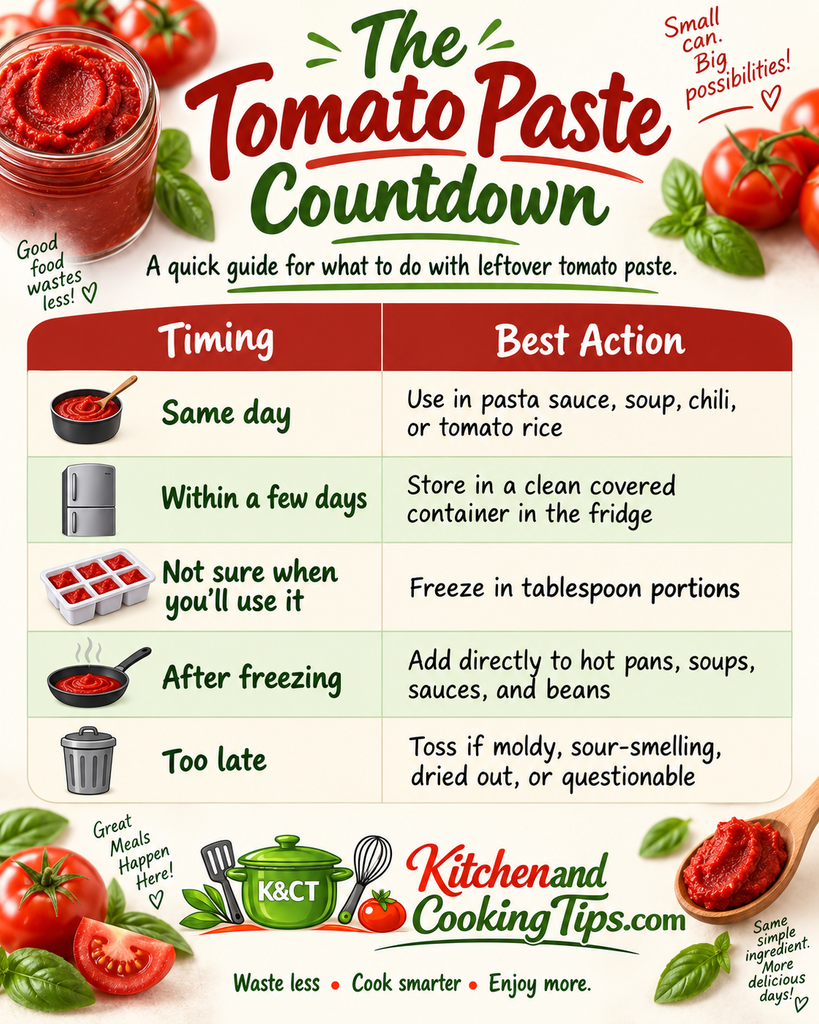
Opened canned foods should be moved to a clean covered container and refrigerated if they are not used right away. Food Standards Australia gives this as general guidance for opened canned foods because once opened, canned foods become perishable.
For tomato paste specifically, the USDA FoodKeeper guidance cited by Serious Eats lists about five days in the refrigerator after opening and two to three months in the freezer for best quality.
For meals you make with tomato paste, follow general leftover rules. USDA guidance says cooked leftovers should be refrigerated within two hours, used within three to four days, and reheated to 165°F. Sauces, soups, and gravies should be brought to a rolling boil when reheating.
Toss tomato paste if it has mold, smells sour or fermented, has an unusual texture, or has been sitting in the refrigerator too long. Scraping mold off the top and using the rest is not a smart rescue plan. That is not kitchen thrift. That is just asking for trouble.
Tomato Paste Use-It-Up Timeline
Practical Tomato Paste Meal Ideas
| What You Have | What to Make |
|---|---|
| Tomato paste + pasta water | Quick tomato pasta |
| Tomato paste + rice | Tomato rice skillet |
| Tomato paste + beans | Smoky bean skillet |
| Tomato paste + broth | Soup starter |
| Tomato paste + flatbread | Quick pizza |
| Tomato paste + ground beef | Meatloaf or meatballs |
| Tomato paste + coconut milk | Chickpea curry |
| Tomato paste + chicken | Tomato pan sauce |
| Tomato paste + lentils | Lentil stew |
| Tomato paste + eggs | Shakshuka-style skillet |
Final Thoughts: Tomato Paste Is Small, But It Pulls Weight
Tomato paste is easy to waste because it comes in a small can and recipes rarely ask for all of it. One tablespoon goes into the pot, and the rest becomes a tiny refrigerator problem.
But it does not have to.
A spoonful can deepen soup. Two tablespoons can build pasta sauce. A little can wake up rice, beans, lentils, stew, curry, meatloaf, or a pan sauce. And if you do not need it this week, freeze it in portions before it becomes one more mystery container.
That is the rhythm of The Use-It-Up Kitchen. Notice what is left. Give it a job. Store it before it spoils. Keep dinner moving.
Tomato paste may be small, but it is not minor. Used well, it can make a quick meal taste more finished than it has any right to taste on a weeknight.
And honestly, that is exactly the kind of kitchen help most of us need.