

Welcome to Week 4 of The Use-It-Up Kitchen, where we take the food you already have and turn it into something useful before it becomes one more mystery container in the fridge.
This week, we are talking about rotisserie chicken.
Rotisserie chicken is one of the easiest grocery-store shortcuts. It is already cooked. It smells like dinner before you even get it home. It can become soup, tacos, rice bowls, pasta, sandwiches, casseroles, salads, wraps, and freezer portions.
But it also has a clock on it.
That is the part people forget. A rotisserie chicken feels like a long-term solution because it is cooked, but it still needs proper storage and a plan. According to USDA guidance for fully cooked rotisserie or fast-food chicken, it should be eaten or refrigerated within two hours of purchase. If it will not be used within that window, USDA recommends cutting it into several pieces and refrigerating it in shallow, covered containers. It should be eaten within three to four days, either cold or reheated to 165°F. It can also be frozen, with best quality when used within four months. (fsis.usda.gov)
So yes, rotisserie chicken is convenient. Very convenient. But it works best when you do not just put the whole container in the fridge and hope inspiration shows up later.
The goal this week is simple: turn one chicken into several easy meals before it dries out or gets forgotten.
The Problem: Rotisserie Chicken Is Easy to Buy and Easy to Waste
Rotisserie chicken seems like the answer to dinner. And often, it is.
The trouble starts after the first meal. Everyone takes the pieces they like. Maybe the legs are gone. Maybe the breast meat is still there. Maybe the little bits around the bones are ignored because nobody feels like dealing with them.
Then the chicken goes into the fridge, still in the plastic container, still mostly whole. The next day, it looks less appealing. The breast meat dries out. The skin gets soft. The container takes up too much space. By day three, you are wondering whether you should make something with it or just admit defeat.
That is where a lot of waste happens.
A rotisserie chicken needs to be broken down and assigned a job. Not in a complicated meal-prep way. Just enough to make it easy to use.
The best move is to pull the meat from the bones while the chicken is still fresh and easy to handle. Keep larger pieces for meals where texture matters, like wraps, bowls, and salads. Save smaller shredded pieces for soup, pasta, tacos, quesadillas, and casseroles.
Once the chicken is separated, dinner feels much closer.
The Rescue Principle: Strip It, Sort It, Sauce It
Rotisserie chicken works because it is already cooked, but it still needs help becoming a second meal. The main rescue principle is this: strip it, sort it, and sauce it.
First, strip the meat from the bones. This reduces waste and makes the chicken easier to store. It also helps you see how much food you actually have.
Second, sort the meat by use. Larger slices or chunks are good for bowls, sandwiches, and salads. Shredded meat is good for tacos, soups, pasta, and skillets. Tiny pieces are still useful. Do not overlook them. They can go into fried rice, scrambled eggs, quesadillas, soup, or chicken salad.
Third, sauce it. Rotisserie chicken is already seasoned, but after refrigeration, it often needs moisture. Sauce, broth, salsa, dressing, gravy, yogurt, pesto, barbecue sauce, or a splash of pasta water can bring it back.
Plain reheated chicken can taste tired. Chicken with a new sauce feels like a new meal.
The Rotisserie Chicken Rescue Chart
| If You Have… | Best Use | What It Needs |
|---|---|---|
| Large breast pieces | Bowls, sandwiches, salads | Sauce or dressing |
| Shredded white meat | Tacos, pasta, soup | Moisture and seasoning |
| Dark meat | Rice bowls, wraps, casseroles | Light reheating |
| Tiny bits | Fried rice, quesadillas, eggs | A skillet or melted cheese |
| Bones and skin | Broth or stock starter | Simmering and straining |
| More than you can use soon | Freezer portions | Labeling and airtight storage |
First, Store Rotisserie Chicken the Right Way
Do not leave rotisserie chicken sitting on the counter while you unload groceries, answer messages, clean the kitchen, and then maybe eat. It should be eaten or refrigerated within two hours, and within one hour if the temperature is above 90°F. The FDA gives this same general “two-hour rule” for meat, poultry, seafood, eggs, and other perishables. (fda.gov)
If you are not serving the whole chicken right away, remove the meat from the bones and store it in shallow, covered containers. Shallow storage helps the chicken cool more quickly and evenly. It also makes the leftovers easier to use the next day.
Label the container with the day you bought it. This sounds fussy until it saves you from sniffing chicken on Thursday and trying to remember whether it was Sunday or Monday. Nobody needs that kind of kitchen math.
If you know you will not use all of it within three to four days, freeze some right away. Do not wait until the chicken is at the edge of its safe window. Freezing works best when the food is still in good condition.
Kitchen Tip
Portion the chicken by future meal. One container for tacos, one for soup, one for bowls, and one for the freezer. When the chicken already has a destination, you are more likely to use it.
Rescue Meal 1: Rotisserie Chicken Rice Bowls
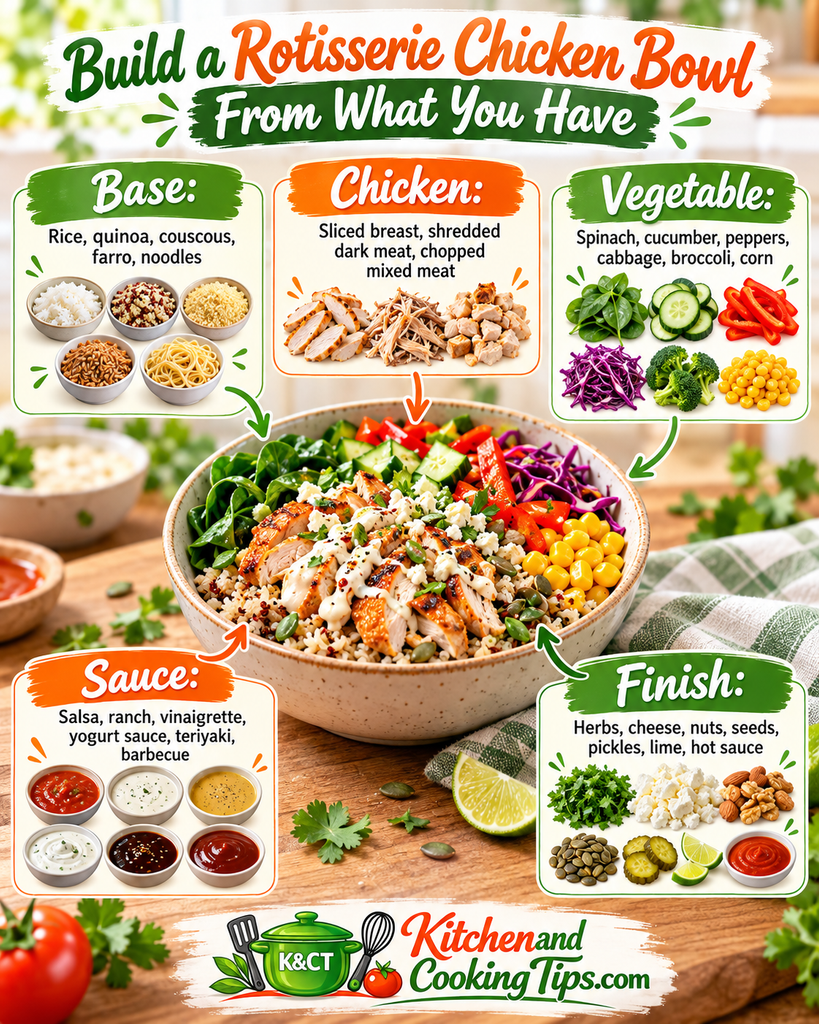
Rice bowls are one of the easiest ways to use rotisserie chicken because they do not require a strict recipe. You need a base, chicken, vegetables, sauce, and something to finish it.
Start with leftover rice, quinoa, couscous, farro, or even cauliflower rice. Add chopped or shredded rotisserie chicken. Then add whatever vegetables you have: cucumber, spinach, roasted broccoli, carrots, corn, peppers, cabbage, avocado, or leftover green beans. Finish with sauce.
That sauce matters. It is what makes the chicken feel like part of the meal instead of a cold leftover sitting on top of rice.
For a taco-style bowl, use rice, chicken, black beans, corn, salsa, cheese, and lime. For a Mediterranean-style bowl, use couscous, chicken, cucumber, tomato, spinach, feta, and yogurt sauce. For a teriyaki-style bowl, use rice, chicken, broccoli, carrots, and teriyaki sauce.
This is the kind of meal that lets small leftovers work together. A little rice, a little chicken, half a pepper, and the last handful of spinach can become lunch or dinner.
Rotisserie Chicken Bowl Builder
Rescue Meal 2: Chicken Tacos, Wraps, and Quesadillas
Rotisserie chicken is made for tortillas.
For tacos, warm shredded chicken in a skillet with a splash of broth, salsa, or water. Add taco seasoning, cumin, chili powder, garlic powder, or smoked paprika. Do not cook it too long. The goal is to warm and season the chicken, not dry it into little chicken strings. We have all done it once.
Add the chicken to tortillas with lettuce, cabbage, salsa, cheese, avocado, sour cream, pickled onions, or whatever is available.
For wraps, keep the chicken moist with a spread or sauce. Ranch, hummus, pesto, barbecue sauce, Caesar dressing, or a simple yogurt sauce can all work. Add greens and crunchy vegetables so the wrap does not feel heavy.
For quesadillas, use smaller pieces of chicken. Cheese acts like glue, which is helpful. Add chicken, cheese, and maybe beans, spinach, peppers, or onions between two tortillas. Cook in a skillet until the outside is crisp and the cheese melts.
Quesadillas are especially good for tiny chicken pieces. The bits that look too small for a meal are perfect here.
Chicken Tortilla Meal Chart
| What You Have | Make This |
|---|---|
| Chicken + salsa + tortillas | Tacos |
| Chicken + cheese + tortillas | Quesadillas |
| Chicken + lettuce + dressing | Wraps |
| Chicken + beans + rice | Burritos |
| Chicken + barbecue sauce + slaw | BBQ chicken wraps |
| Chicken + pesto + spinach | Pesto chicken wraps |
Rescue Meal 3: Chicken Soup
Chicken soup is the classic rotisserie chicken rescue, and it is classic for a reason.
The chicken is already cooked, so the trick is not to boil it to death. Build the soup first. Cook onion, carrot, celery, garlic, or whatever soup vegetables you have. Add broth. Add noodles, rice, potatoes, beans, or vegetables. Once the soup is nearly done, stir in the rotisserie chicken and heat it through.
If you add the chicken too early, it can dry out or become stringy. Add it near the end.
You can make chicken noodle soup, chicken and rice soup, chicken tortilla soup, white bean chicken soup, lemon chicken soup, or creamy chicken vegetable soup. The same basic chicken can go in several directions.
Chicken Soup Formula
| Ingredient | Amount for 4 Servings |
|---|---|
| Shredded rotisserie chicken | 2 cups |
| Broth | 6 cups |
| Vegetables | 2–3 cups |
| Noodles, rice, beans, or potatoes | 1–2 cups |
| Seasoning | Salt, pepper, herbs, garlic, lemon, chili powder |
| Finish | Parsley, lime, Parmesan, cream, hot sauce |
Kitchen Tip
Use the bones for broth if you have time. Simmer the carcass with onion, celery, carrot, bay leaf, and water. Strain it well. If you are not making broth right away, freeze the bones in a labeled bag before they get forgotten.
Rescue Meal 4: Chicken Pasta or Creamy Chicken Skillet
Rotisserie chicken can turn pasta into a full meal fast.
Start with a sauce. It can be tomato sauce, pesto, Alfredo-style sauce, garlic butter, cream sauce, or a quick pan sauce made from broth and Parmesan. Add cooked pasta, a splash of pasta water, and chopped chicken. Stir until the chicken is hot and the sauce coats the noodles.
Spinach, peas, mushrooms, broccoli, roasted peppers, sun-dried tomatoes, and zucchini all work here. This is a good place to use vegetables that are still fine but no longer exciting on their own.
For a creamy chicken skillet, skip the pasta and use rice, potatoes, or vegetables. Warm chicken with a little butter, garlic, broth, and cream or milk. Add peas or spinach at the end. Serve it over rice, toast, biscuits, noodles, or mashed potatoes.
This is not fancy cooking. It is “the chicken is already cooked and we need dinner” cooking. That counts.
Chicken Pasta Flavor Paths
| Sauce Style | Add-Ins |
|---|---|
| Tomato sauce | Spinach, mushrooms, Parmesan |
| Pesto | Peas, zucchini, mozzarella |
| Garlic butter | Broccoli, lemon, black pepper |
| Cream sauce | Mushrooms, peas, Parmesan |
| Buffalo-style | Hot sauce, ranch, celery |
| Barbecue | Corn, cheddar, green onion |
Rescue Meal 5: Chicken Salad, Sandwiches, and Lettuce Cups
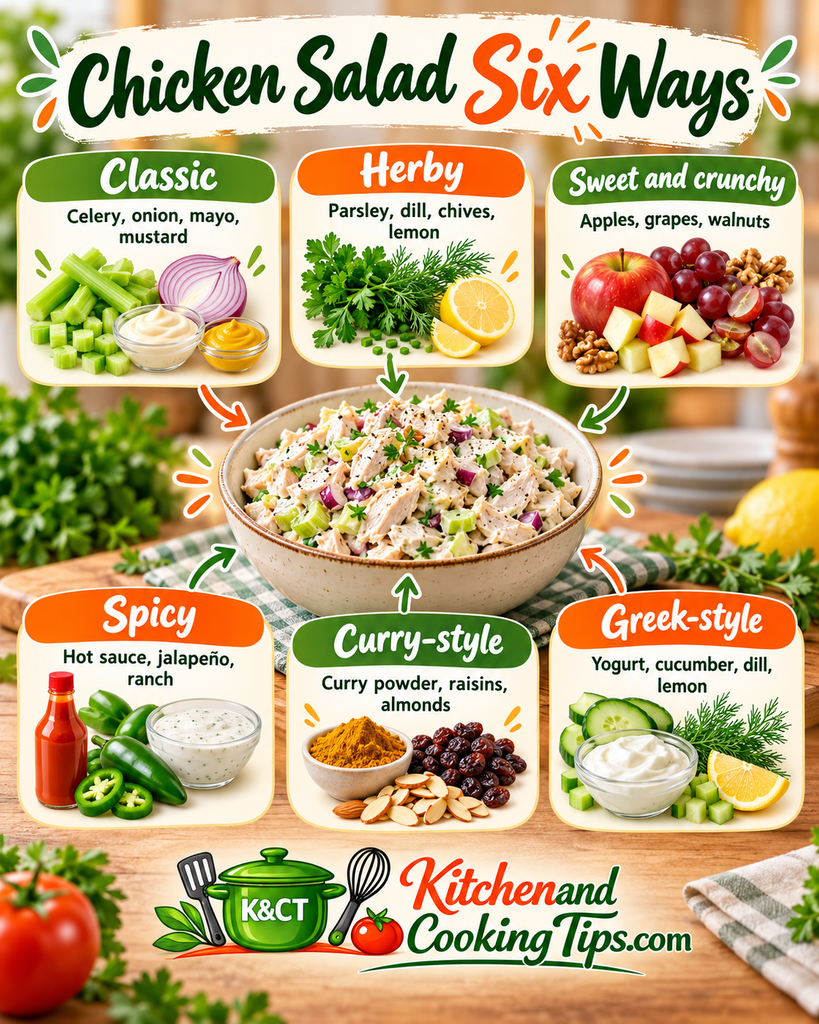
Chicken salad is one of the best cold uses for rotisserie chicken, especially when you have breast meat that might dry out if reheated.
Chop the chicken and mix it with mayonnaise, Greek yogurt, or a combination of both. Add celery, onion, pickles, grapes, apples, nuts, herbs, mustard, lemon juice, or a little hot sauce. Keep the mixture simple or make it your own.
For sandwiches, use bread, rolls, croissants, wraps, pita, or crackers. For lighter meals, spoon chicken salad into lettuce cups or over greens. For meal prep, store the chicken salad separately from bread or lettuce so things do not get soggy.
Chicken salad is also forgiving. Dry chicken can be helped with dressing. Small pieces work fine. Leftover herbs can go in. Half a celery stalk finally has a purpose.
Bonus Use: Freeze Meal-Sized Portions
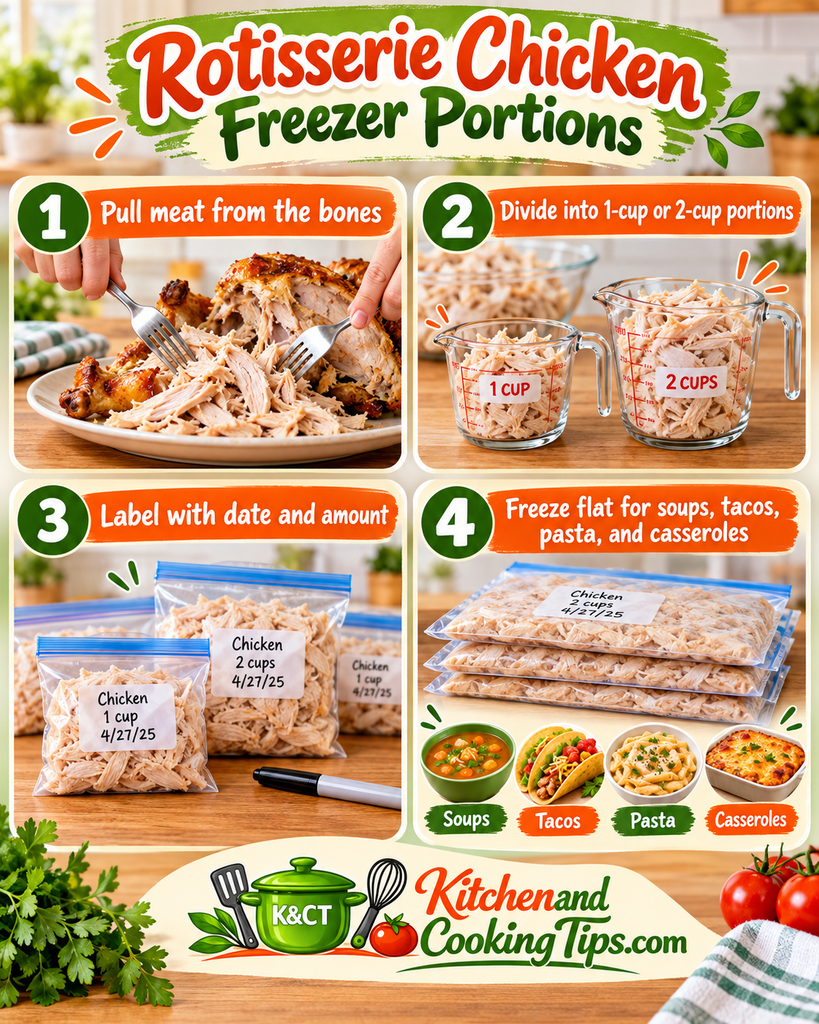
If you bought a rotisserie chicken and realize you will not use all of it, freeze the extra meat in meal-sized portions.
Remove the chicken from the bones first. Portion it into one-cup or two-cup amounts. Press out extra air, label the bag, and freeze it flat. Flat bags thaw faster and stack better.
Frozen cooked chicken works well in soups, casseroles, enchiladas, quesadillas, pasta, fried rice, and skillet meals. It is not always ideal for cold salads after freezing because the texture can change, but it is very useful in cooked dishes.
For best quality, USDA guidance says ready-prepared chicken can be frozen and used within four months for flavor and texture. (fsis.usda.gov)
Storage and Safety Note: When to Use, Freeze, or Toss
Rotisserie chicken should not sit out at room temperature for more than two hours, or one hour if the temperature is above 90°F. This matches FDA safe handling guidance for meat and poultry. (fda.gov)
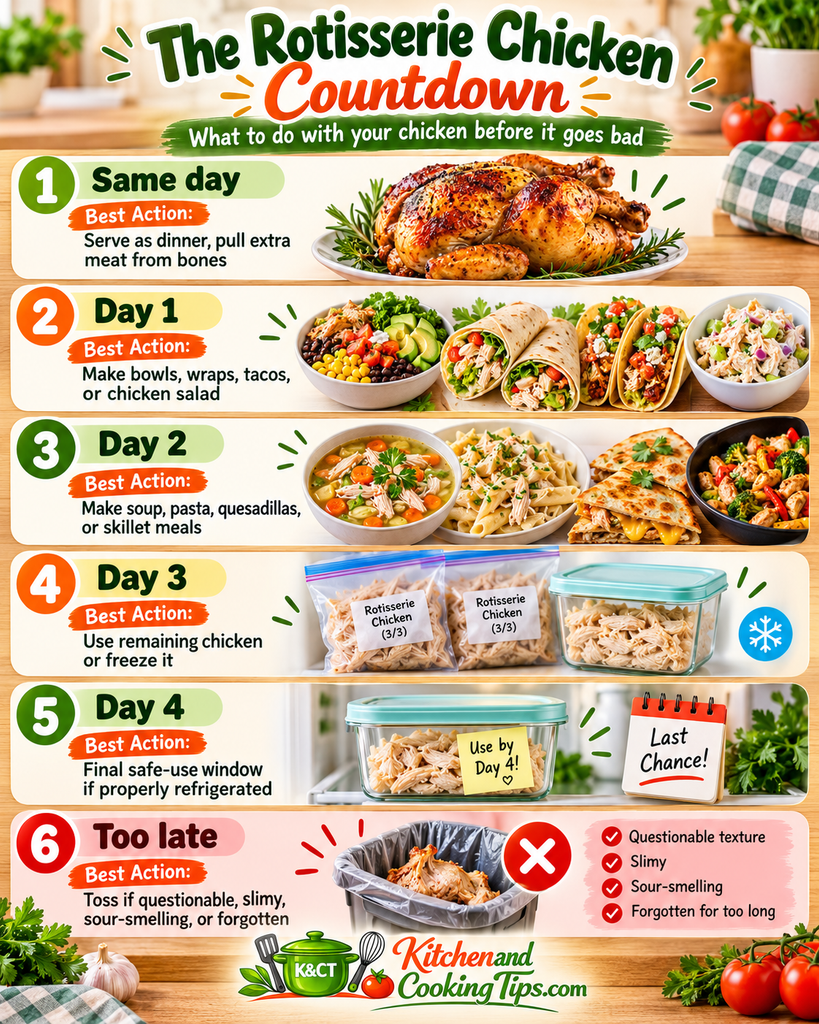
Once refrigerated, ready-prepared chicken should be eaten within three to four days. It can be eaten cold or reheated to 165°F. If you will not use it within that time, freeze it while it is still in good condition. (fsis.usda.gov)
When reheating leftovers, USDA guidance says they should reach 165°F as measured with a food thermometer. Covering leftovers helps retain moisture and heat the food all the way through. Sauces, soups, and gravies should be brought to a rolling boil when reheating. (fsis.usda.gov)
Toss chicken if it smells off, feels slimy, has visible mold, or has been stored too long. Also toss it if you do not know how long it sat out before being refrigerated. It is frustrating, yes. But guessing with poultry is not worth it.
Rotisserie Chicken Use-It-Up Timeline
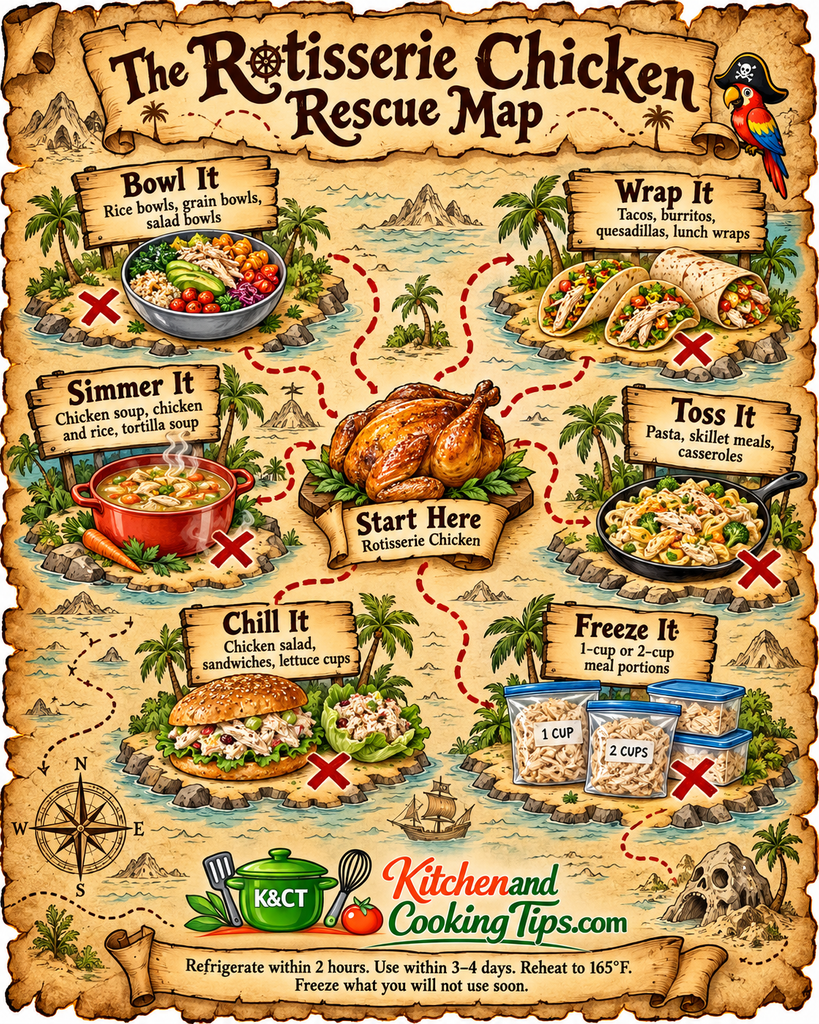
The Rotisserie Chicken Rescue Map
Practical Rotisserie Chicken Meal Ideas
| What You Have | What to Make |
|---|---|
| Chicken + rice + salsa | Taco chicken bowl |
| Chicken + tortillas + cheese | Quesadillas |
| Chicken + broth + noodles | Chicken noodle soup |
| Chicken + pasta + pesto | Pesto chicken pasta |
| Chicken + mayo + celery | Chicken salad sandwiches |
| Chicken + beans + corn | Chicken burrito bowls |
| Chicken + barbecue sauce + slaw | BBQ chicken wraps |
| Chicken + spinach + cream sauce | Creamy chicken skillet |
| Chicken + eggs + rice | Chicken fried rice |
| Chicken + vegetables + broth | Chicken vegetable soup |
Final Thoughts: One Chicken Can Do More Than One Dinner
Rotisserie chicken is popular because it solves the first problem. It gets food on the table fast.
But it can also solve the second problem, which is what to eat tomorrow.
A whole chicken can become rice bowls, tacos, soup, pasta, chicken salad, quesadillas, wraps, and freezer portions. The difference is whether you leave it whole in the fridge or break it down while it is still fresh.
That is the heart of The Use-It-Up Kitchen. Notice what you have. Store it well. Give it a job before it fades into the back of the refrigerator.
One rotisserie chicken will not fix every dinner problem. Let’s not get dramatic. But it can make the next few meals easier, cheaper, and a lot less stressful.
And some weeks, that is exactly what the kitchen needs.