
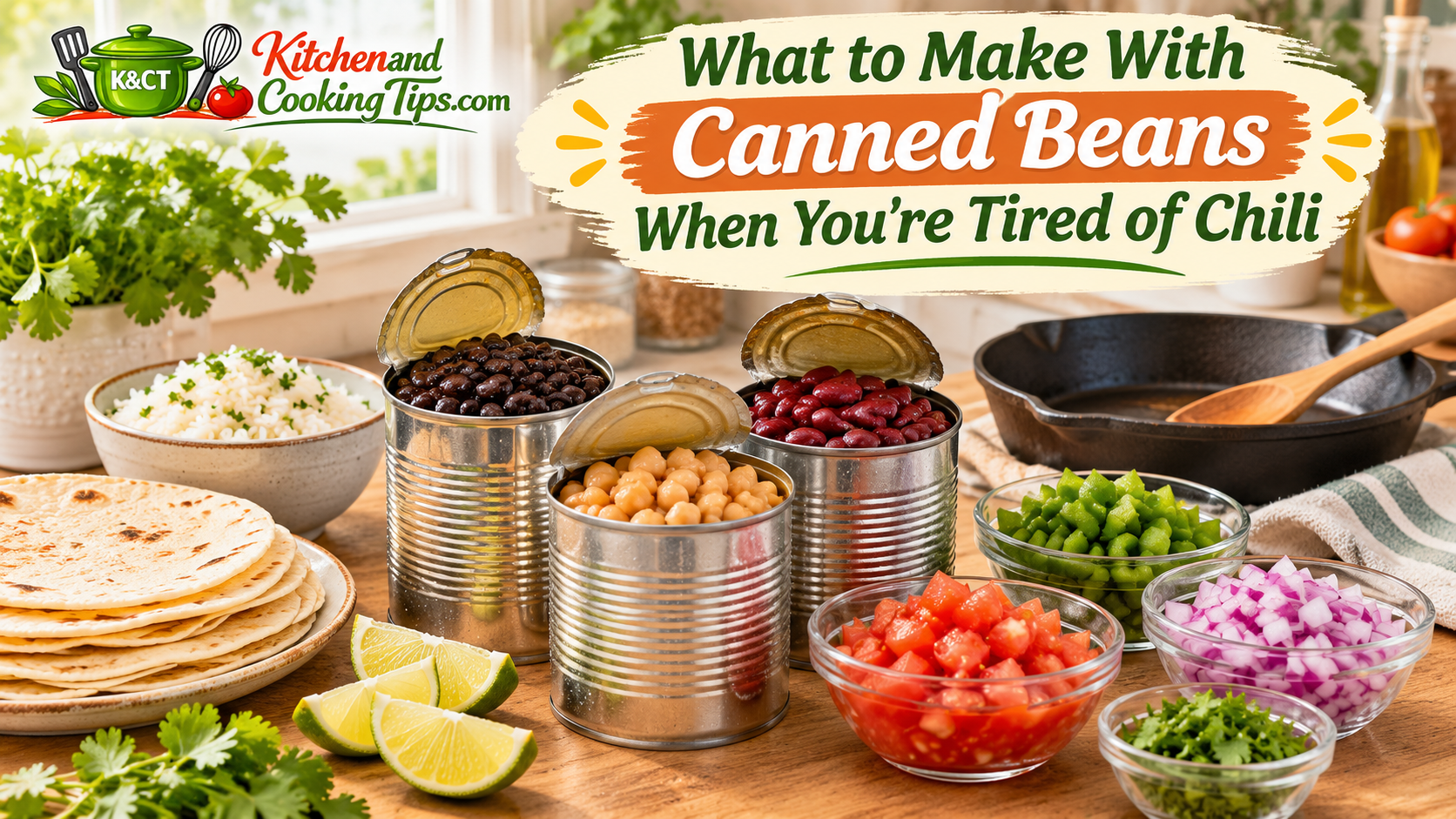
Welcome to Week 7 of The Use-It-Up Kitchen, where we take the practical ingredients already sitting in your pantry, fridge, or freezer and turn them into meals before another grocery run sneaks onto the schedule.
This week, we are talking about canned beans.
Black beans. Pinto beans. Chickpeas. Kidney beans. Cannellini beans. Navy beans. Great Northern beans. Maybe a random can of butter beans you bought because it seemed like a good idea at the time.
Canned beans are one of the best pantry ingredients to keep around because they are already cooked, affordable, filling, and ready to become dinner quickly. Texas A&M AgriLife Extension’s Dinner Tonight program describes canned vegetables and beans as a convenient way to include inexpensive, nutrient-dense foods in everyday meals.
The problem is that many people only think of chili.
Chili is fine. Chili has its place. But when every can of beans turns into chili, beans start to feel boring. They are not boring. They just need more than one job.
Canned beans can become tacos, rice bowls, soups, salads, pasta, dips, skillet meals, wraps, burgers, toast toppers, and quick side dishes. Some meals need the beans rinsed and drained. Some are better with the liquid. Some need heat and spices. Others need acid, herbs, crunch, or sauce.
That is the whole trick. Match the bean to the meal instead of forcing every can into the same pot.
The Problem: Canned Beans Are Useful, But They Get Stuck in One Recipe
Canned beans often sit in the pantry for months because they feel like “backup food.” They are there for emergencies, chili night, taco soup, or a recipe you planned and then forgot.
There is nothing wrong with keeping backup food. A useful pantry is a good thing. But when beans become invisible, they stop helping. You open the cabinet, see five cans, and still think, “There’s nothing for dinner.”
There is dinner. It just needs direction.
The other problem is that beans can feel heavy if they are treated the same way every time. A bowl of beans with chili powder is good once. Maybe twice. After that, you need contrast. Beans need brightness, crunch, creaminess, heat, herbs, or something crisp on top.
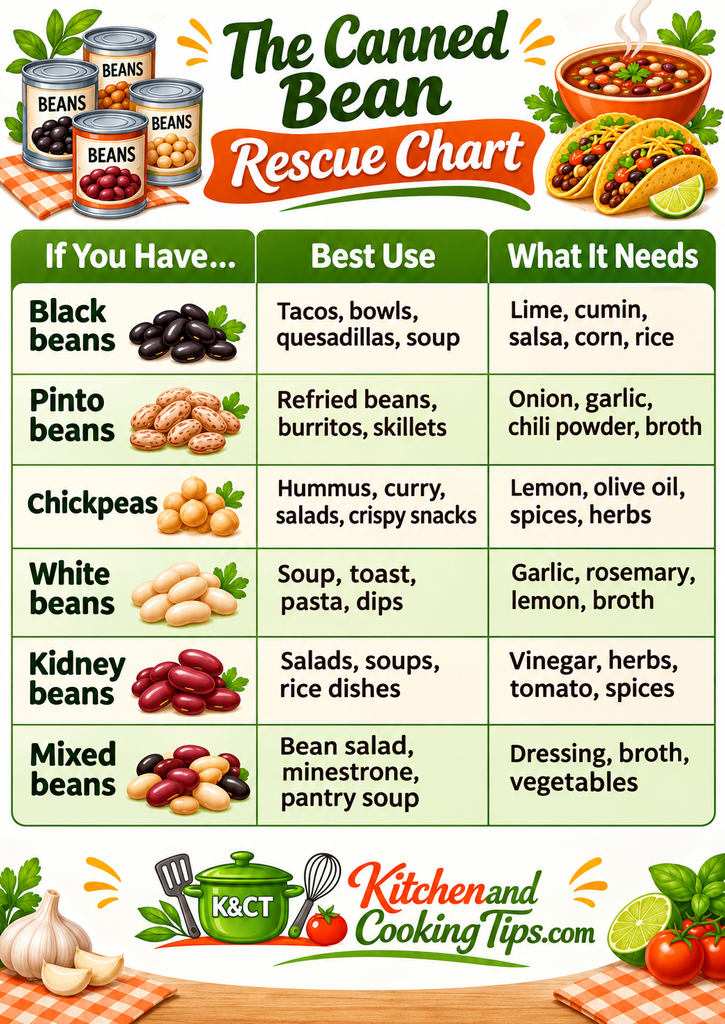
A can of black beans can go taco-style, but it can also go into rice bowls, quesadillas, soup, salad, or bean burgers. Chickpeas can become hummus, crispy snacks, curry, pasta, salad, or smashed sandwich filling. White beans can become soup, toast, pasta, dip, or a creamy skillet meal.
The pantry has more options than it looks like it has.
The Rescue Principle: Rinse, Season, Mash, Crisp, or Simmer
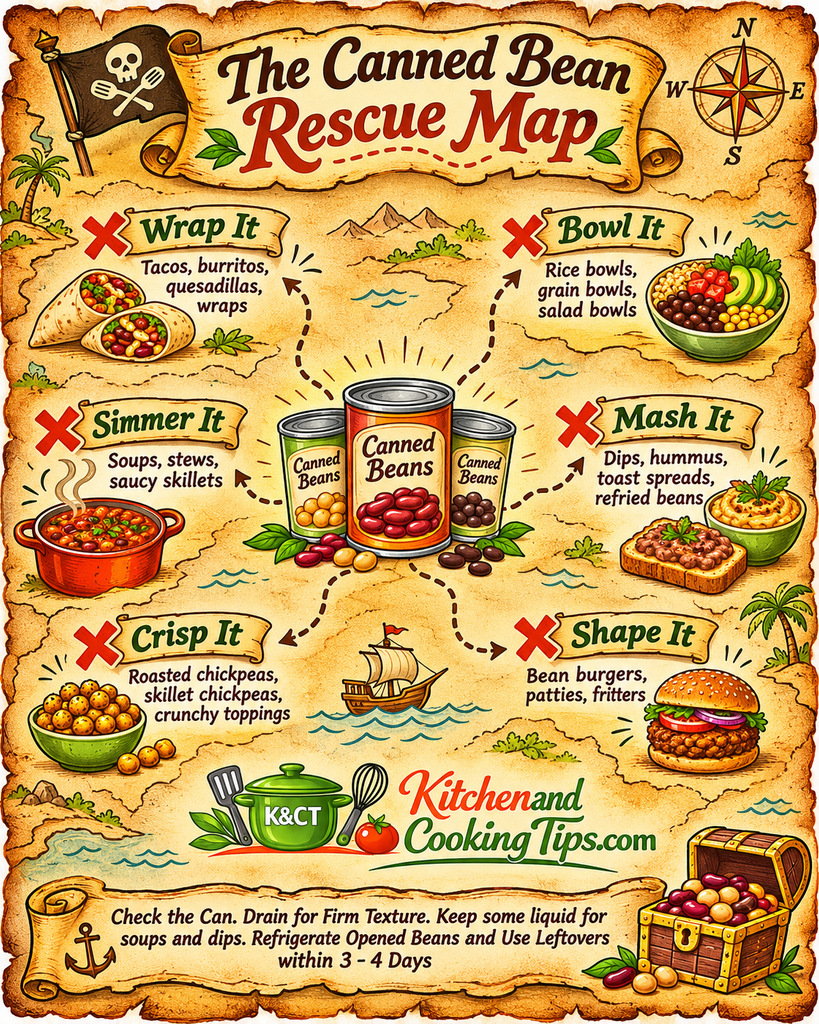
Canned beans are already cooked, so you are not really “cooking beans” most of the time. You are changing their texture and flavor.
You can rinse them when you want a cleaner flavor and firmer texture for salads, bowls, tacos, wraps, and skillet meals. Rinsing can also help reduce sodium; It is often recommended to rinse canned beans for about 10 seconds under lukewarm water and draining them for about two minutes as a way to reduce sodium while keeping other vitamins and minerals largely intact.
You can season them with spices, herbs, aromatics, oil, acid, broth, tomato paste, or sauce.
You can mash them into dips, spreads, bean burgers, quesadilla filling, or creamy toast toppers.
You can crisp them in the oven or skillet, especially chickpeas.
Or you can simmer them into soups, stews, pasta, curries, and saucy skillets.
That gives one can of beans several possible futures. Much better than pantry guilt.
First, Check the Can and Store Opened Beans Properly
Before using canned beans, check the can. The USDA notes that canned goods can last for years when the can is in good condition, meaning no rust, dents, or swelling. The FDA also advises against buying cans that are swollen, bulging, leaking, rusted along the seams, or dented along the top or side seams because damage may allow bacteria to enter.
Once a can is opened, treat the beans like a perishable food. If you do not use the whole can, transfer the leftovers to a clean covered container and refrigerate them. Do not leave them open in the pantry, and do not let them sit around on the counter while you figure out dinner tomorrow.
The FDA’s general food storage guidance recommends refrigerating foods that need refrigeration right away and following the two-hour rule for perishables, or one hour when the temperature is above 90°F. It also recommends keeping the refrigerator at or below 40°F.
If you cook beans into soup, pasta, casseroles, or another leftover meal, follow general leftover storage guidance. FoodSafety.gov lists soups and stews at three to four days in the refrigerator and two to three months in the freezer for quality. It also lists cooked leftovers at three to four days in the refrigerator.
Kitchen Tip
When you open a can of beans and only need half, label the leftover container with the bean type and date. “Half can beans” is not helpful three days later. “Black beans, Monday” is helpful. Small difference, big fridge sanity.
Rescue Meal 1: Bean Tacos, Burritos, and Quesadillas
Beans belong in tortillas. This is one of the fastest ways to turn one can into a meal.
For black bean tacos, drain and rinse the beans, then warm them in a skillet with a little oil, cumin, garlic powder, chili powder, and a splash of water or salsa. Mash some of the beans with the back of a spoon so they hold together. Spoon them into tortillas with lettuce, cabbage, cheese, avocado, salsa, pickled onions, or lime.
For pinto bean burritos, warm the beans with onion, garlic, and a little broth. Mash them lightly. Add rice, cheese, salsa, or leftover chicken if you have it. Roll into tortillas and toast the burritos in a skillet if you want a crisp outside.
For quesadillas, mash beans with a little salsa or hot sauce, spread them thinly on a tortilla, add cheese, and cook until the tortilla is crisp and the cheese melts. The beans help the filling feel like dinner instead of just melted cheese in a tortilla. Although, to be fair, melted cheese has rescued many evenings.
What You Have, What You Can Make
Turn canned beans and everyday pantry ingredients into quick, satisfying meals.
| What You Have | Make This |
|---|---|
| Black beans + tortillas + salsa | Black bean tacos |
| Pinto beans + cheese + tortillas | Bean quesadillas |
| Beans + rice + salsa | Burritos |
| Beans + eggs + tortillas | Breakfast tacos |
| Chickpeas + hummus + vegetables | Wraps |
| White beans + pesto + greens | Mediterranean-style wraps |
Rescue Meal 2: Rice Bowls and Grain Bowls
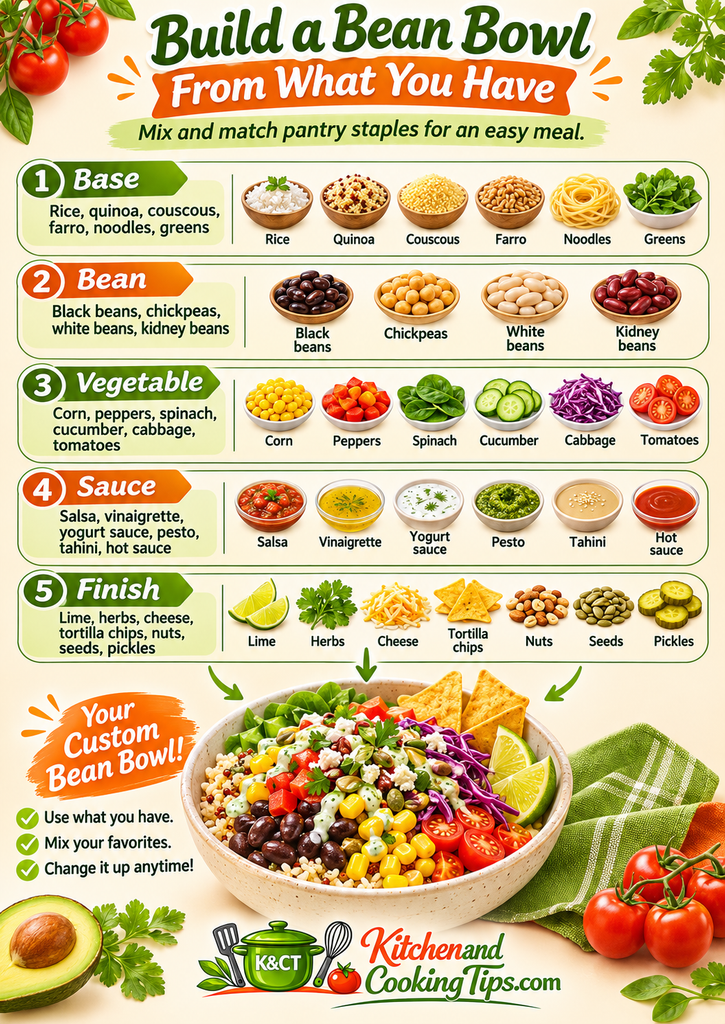
Beans and rice are pantry partners for a reason. Together, they are filling, flexible, and easy to change with sauce.
Start with cooked rice, quinoa, couscous, farro, or leftover grains. Add drained beans. Add vegetables. Add sauce. That is the basic formula.
Black beans work well with rice, corn, salsa, lettuce, avocado, and lime. Chickpeas work with couscous, cucumber, tomato, parsley, lemon, and yogurt sauce. White beans work with farro, spinach, roasted vegetables, pesto, or vinaigrette. Kidney beans work in a more picnic-style bowl with rice, celery, peppers, herbs, and vinegar-based dressing.
The key is contrast. Beans are soft, so add something crisp. Cabbage, cucumber, radishes, onions, peppers, toasted nuts, seeds, tortilla chips, or croutons all help.
Rescue Meal 3: Bean Soup Without Making Chili Again
Beans are perfect for soup, and no, it does not have to be chili.
For white bean soup, cook onion, carrot, celery, and garlic in olive oil. Add white beans, broth, rosemary or thyme, and a handful of spinach or kale near the end. Mash some of the beans to thicken the soup.
For black bean soup, simmer black beans with onion, garlic, cumin, broth, salsa, and a little lime. Blend part of it if you want a thicker texture.
For chickpea vegetable soup, use chickpeas with broth, canned tomatoes, carrots, potatoes, zucchini, or frozen vegetables. Add lemon and parsley at the end.
Bean soup is useful because it welcomes leftovers. A little cooked rice, half a bag of spinach, a spoonful of tomato paste, leftover chicken, or frozen vegetables can all go into the pot.
Bean Soup Formula
A simple, customizable soup for 4 servings.
| Ingredient | Amount for 4 Servings |
|---|---|
| Canned beans | 2 cans, drained or partly drained |
| Broth | 4–6 cups |
| Aromatics | Onion, garlic, celery, carrot |
| Vegetables | 2–3 cups fresh or frozen |
| Seasoning | Herbs, spices, salt, pepper, lemon, vinegar |
| Finish | Olive oil, cheese, herbs, hot sauce, croutons |
Kitchen Tip
Mash or blend part of the beans to thicken soup without adding cream. It makes the broth feel more substantial and helps the soup taste like it simmered longer than it did.
Rescue Meal 4: White Bean Toasts
White bean toast is one of the easiest ways to turn beans into lunch.
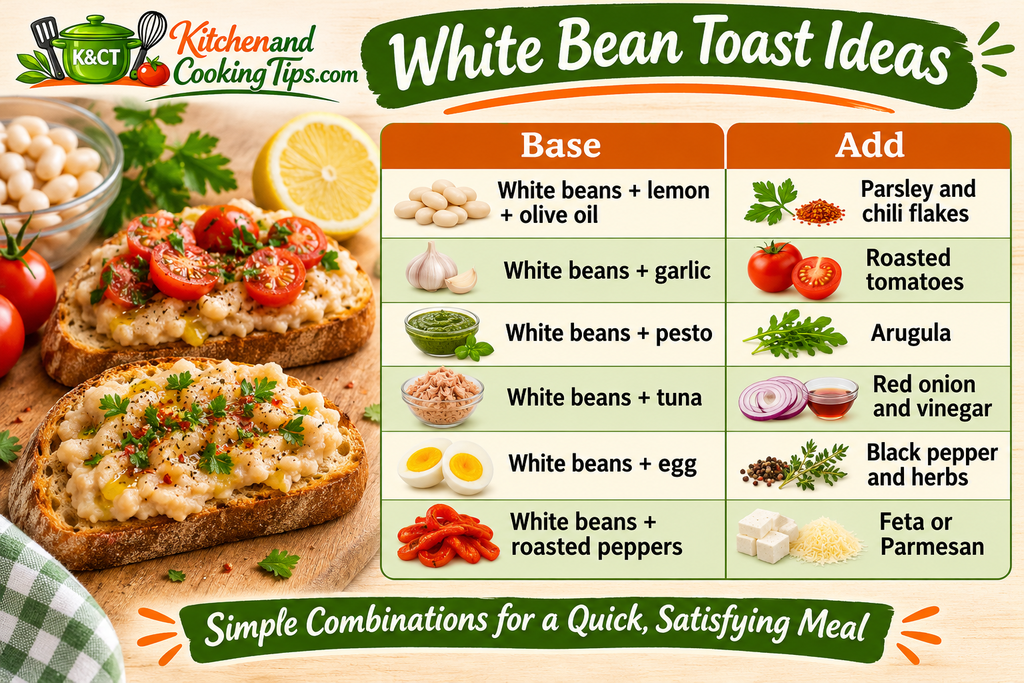
Drain and rinse cannellini beans, Great Northern beans, or navy beans. Mash them with olive oil, lemon juice, garlic, salt, pepper, and chopped herbs. Spoon the mixture over toast. Add tomatoes, roasted peppers, arugula, a fried egg, tuna, Parmesan, chili flakes, or a drizzle of olive oil.
This is a good use for bread that is heading toward stale. Toast makes the bread useful again, and the beans give it substance.
You can keep the beans chunky or mash them smooth. If they seem dry, add more olive oil or a spoonful of water. If they taste flat, add lemon juice or vinegar. Beans often need acid more than they need more salt.
Rescue Meal 5: Chickpea Salad Sandwiches
Chickpeas are not just for hummus.
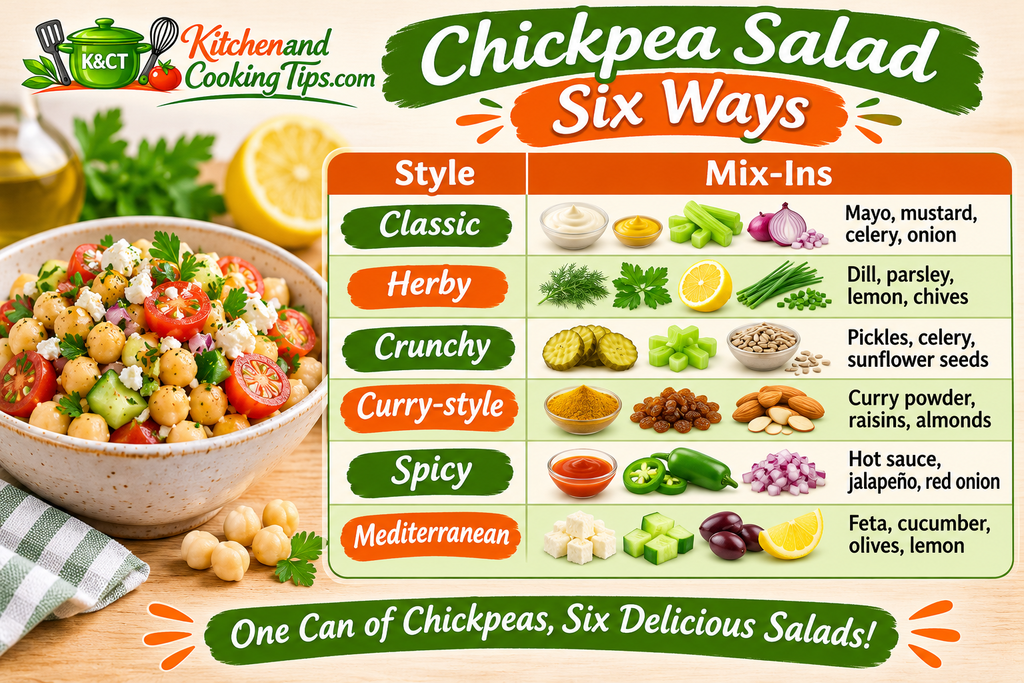
For a quick chickpea salad, drain and rinse a can of chickpeas. Mash them with a fork, leaving some texture. Stir in mayonnaise, Greek yogurt, mustard, lemon juice, celery, onion, pickles, herbs, salt, and pepper. Use it like tuna salad or chicken salad.
Serve it on bread, in wraps, over greens, with crackers, or in lettuce cups. Add curry powder, dill, chopped apples, hot sauce, or sunflower seeds if you want a different direction.
This is a useful meal when you want something cold, fast, and pantry-based. No stove. No oven. No drama.
Rescue Meal 6: Bean Pasta
Beans and pasta make a fast pantry dinner that does not feel like “just noodles.”
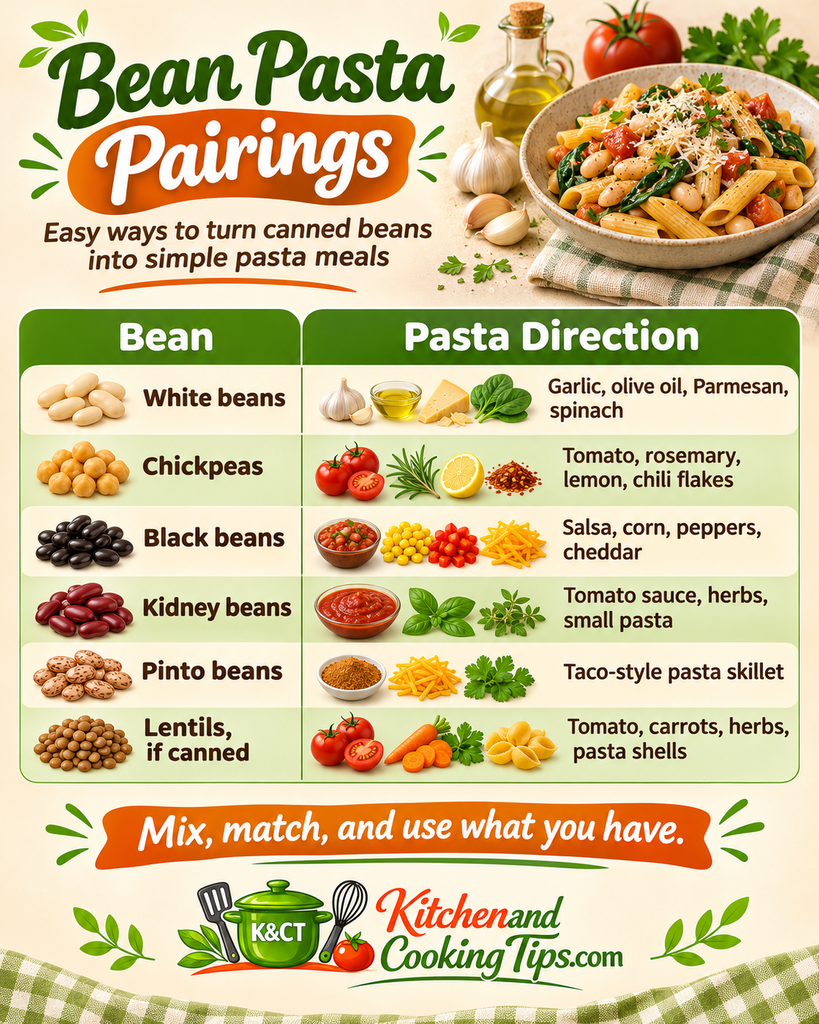
White beans are especially good with pasta. Cook garlic in olive oil, add white beans, a splash of pasta water, and a little Parmesan. Mash some beans so they create a light sauce. Add spinach, kale, broccoli, peas, mushrooms, or roasted tomatoes.
Chickpeas also work well in pasta, especially with tomato sauce, garlic, rosemary, chili flakes, or lemon. Black beans can go into taco pasta with salsa, corn, cheese, and peppers. Kidney beans can go into minestrone-style pasta with tomatoes and Italian seasoning.
The secret is pasta water. It helps the beans, oil, cheese, and seasonings cling to the noodles. Without it, the dish can feel dry.
Rescue Meal 7: Crispy Chickpeas
Crispy chickpeas are a snack, salad topping, bowl topping, or soup topper.
Drain and rinse chickpeas, then dry them well. This matters. Wet chickpeas steam instead of crisping. Toss them with oil, salt, and seasonings. Roast them on a sheet pan until crisp around the edges, or cook them in a skillet.
Seasoning can go in many directions: smoked paprika, curry powder, garlic powder, chili powder, ranch seasoning, cumin, lemon pepper, or za’atar.
Crispy chickpeas are best eaten soon after cooking. They may soften as they sit, which is not the end of the world, but the fresh crunch is the point.
Crispy Chickpeas: One Can, Six Flavors
Easy seasoning ideas to turn one can of chickpeas into a crunchy snack or salad topper.
| Flavor Style | Seasoning Ideas |
|---|---|
| Smoky | Smoked paprika, garlic, black pepper |
| Taco-style | Cumin, chili powder, lime zest |
| Curry | Curry powder, turmeric, cayenne |
| Herby | Rosemary, thyme, garlic |
| Tangy | Lemon pepper, vinegar powder if available |
| Spicy | Cayenne, chili flakes, hot honey after roasting |
Rescue Meal 8: Bean Dip or Hummus
Bean dip is the answer when you have one can of beans and need a snack, lunch base, or spread.
For hummus, blend chickpeas with tahini, lemon juice, garlic, olive oil, salt, and a little water. For black bean dip, blend black beans with lime, cumin, garlic, salsa, and a little olive oil. For white bean dip, blend white beans with lemon, rosemary, garlic, and olive oil.
Bean dips can be smooth or chunky. They can go with vegetables, pita, chips, crackers, toast, wraps, sandwiches, rice bowls, or roasted potatoes.
This is also a good way to use beans that are slightly broken or soft. Texture matters less when everything is blended.
Bean Dip Formula
Choose a bean, add creamy richness, balance with acid, and finish with flavor.
| Component | Options |
|---|---|
| Bean | Chickpeas, black beans, white beans, pinto beans |
| Fat | Olive oil, tahini, avocado, yogurt |
| Acid | Lemon, lime, vinegar |
| Flavor | Garlic, cumin, herbs, roasted peppers, salsa |
| Liquid | Water, bean liquid, broth |
| Finish | Herbs, chili oil, paprika, seeds |
Kitchen Tip
If the dip tastes dull, do not immediately add more garlic. Try acid first. Lemon juice, lime juice, or vinegar can wake up beans fast.
Rescue Meal 9: Bean Skillet Meals
A bean skillet is what you make when you want dinner to happen in one pan.
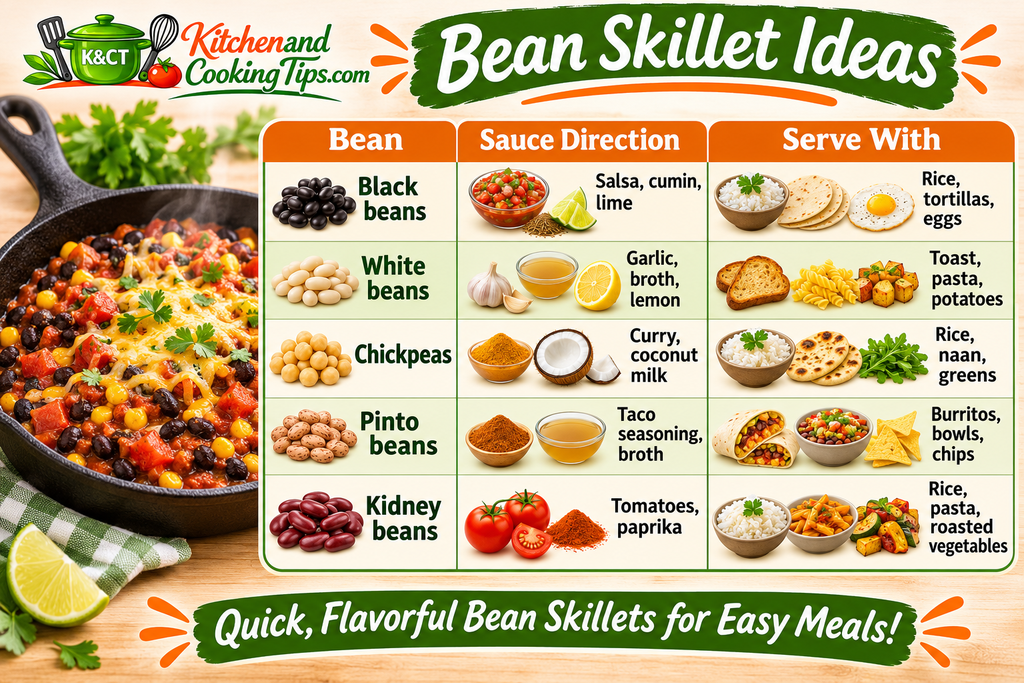
Start with onion or garlic in oil. Add spices or tomato paste if you have them. Add drained beans and a splash of broth, water, salsa, canned tomatoes, or coconut milk. Simmer until the beans are hot and the sauce thickens.
Serve the skillet over rice, toast, baked potatoes, tortillas, pasta, or greens. Add an egg on top if that makes sense. It often does.
Try black beans with salsa and corn. White beans with garlic, spinach, and lemon. Chickpeas with curry powder and coconut milk. Pinto beans with peppers and taco seasoning. Kidney beans with tomatoes and smoked paprika.
Rescue Meal 10: Bean Burgers and Patties
Bean burgers are a smart use for beans when you want something different from soup or bowls.
Drain and rinse the beans, then dry them well. Mash them with breadcrumbs, oats, cooked rice, egg or flax egg, spices, onion, garlic, and a little sauce. Shape into patties and cook in a skillet or bake.
Black beans work well for burgers. Chickpeas work for falafel-style patties. White beans can become softer patties with herbs and lemon. Pinto beans can go in a taco-style direction.
The key is moisture control. If the mixture is too wet, the patties fall apart. Add breadcrumbs or oats. If it is too dry, add a spoonful of salsa, yogurt, egg, or olive oil.
Bean Patty Binder Guide
Simple troubleshooting tips for homemade bean patties that hold together and taste great.
| Problem | Fix |
|---|---|
| Mixture too wet | Add breadcrumbs, oats, crushed crackers, or cooked rice |
| Mixture too dry | Add salsa, egg, yogurt, olive oil, or bean liquid |
| Flavor too flat | Add salt, acid, spices, mustard, or herbs |
| Patties falling apart | Chill mixture before cooking |
| Outside not browning | Use enough heat and a lightly oiled pan |
Should You Use the Bean Liquid?
Sometimes yes. Sometimes no.
The liquid in canned beans is starchy and salty. In soups, stews, dips, and saucy skillets, a small amount can help with body. In salads, tacos, bowls, crispy chickpeas, and bean burgers, it usually gets in the way.
For chickpeas, the liquid is often called aquafaba and can be used in some vegan baking and whipping applications, though that is its own topic. For this series, the simple rule is enough: save the liquid when you need body, drain and rinse when you need clean flavor and firm texture.
Drain or Keep the Liquid?
When to drain and rinse canned beans, and when the liquid can actually help.
| Dish | Drain and Rinse? | Why |
|---|---|---|
| Bean salad | Yes | Cleaner flavor and better texture |
| Tacos | Usually yes | Prevents soggy filling |
| Rice bowls | Yes | Keeps bowl from getting muddy |
| Soup | Optional | Liquid can add body |
| Bean dip | Optional | Helps loosen texture |
| Crispy chickpeas | Yes | Beans need to be dry |
| Bean burgers | Yes | Too much moisture weakens patties |
| Saucy skillet | Optional | Depends on sauce thickness |
Storage and Safety Note: When to Use, Refrigerate, Freeze, or Toss
Unopened canned beans can stay in the pantry as long as the can is in good condition, but damaged cans are different. Avoid swollen, bulging, leaking, badly dented, rusted, or seam-damaged cans. The FDA specifically warns that bulging cans may signal dangerous bacterial growth and that dents along seams or leaking packages can allow bacteria to enter.
Once opened, move leftover beans to a clean covered container and refrigerate them. Keep your refrigerator at or below 40°F, and do not leave perishable foods out at room temperature for more than two hours.
Use refrigerated bean dishes within the same general leftover window you would use for soups, stews, and cooked leftovers. FoodSafety.gov lists soups and stews at three to four days in the refrigerator and two to three months in the freezer for quality.
Toss beans if they smell off, have mold, feel slimy, foam strangely after storage, or have been sitting in the fridge too long. Also toss the contents of any can that spurts, smells bad, looks spoiled, or came from a damaged can. No pantry meal is worth guessing over.
The Canned Bean Countdown
A simple guide to storing, using, freezing, and knowing when to discard canned beans.
| Timing | Best Action |
|---|---|
| Pantry storage | Keep unopened cans in a cool, dry place |
| When opening | Check for damage, odor, and normal appearance |
| Same day | Use in tacos, bowls, soup, pasta, or dip |
| Within 3–4 days | Use refrigerated opened beans or bean leftovers |
| Before they linger | Freeze cooked bean soups, stews, or patties |
| Too late | Toss if moldy, slimy, sour-smelling, or questionable |
Practical Canned Bean Meal Ideas
Ten easy ways to transform canned beans and everyday ingredients into delicious meals.
| What You Have | What to Make |
|---|---|
| Black beans + tortillas + salsa | Black bean tacos |
| Pinto beans + cheese + tortillas | Bean quesadillas |
| Chickpeas + lemon + tahini | Hummus |
| White beans + toast + olive oil | White bean toast |
| Beans + rice + vegetables | Bean rice bowl |
| Chickpeas + curry powder + coconut milk | Chickpea curry |
| White beans + broth + spinach | White bean soup |
| Kidney beans + vinegar + herbs | Bean salad |
| Black beans + oats + spices | Bean burgers |
| Chickpeas + oil + paprika | Crispy chickpeas |
Final Thoughts: Canned Beans Are Not Just Backup Food
Canned beans are easy to overlook because they are always there. They sit quietly in the pantry, waiting for chili night or some future emergency meal.
But they can do more than wait.
A can of beans can become tacos, rice bowls, soup, pasta, dip, toast, salad, crispy snacks, skillet meals, or burgers. The difference is not complicated. It comes down to texture, seasoning, and a little direction.
Rinse them when you want clean flavor. Mash them when you need a spread or filling. Simmer them when dinner needs warmth. Crisp them when the meal needs crunch. Add acid, herbs, sauce, or spice when they taste flat.
That is the heart of The Use-It-Up Kitchen. Look at what is already there. Give it a job. Make dinner easier without making another grocery trip the automatic answer.
One can of beans may not look exciting on the shelf. But with the right plan, it can carry a weeknight meal.
And honestly, that is exactly why it belongs in the pantry.