
The Problem
The “Broken” Batter and Dense Cakes Almost every baking recipe for October’s spice cakes or pumpkin breads calls for “Room Temperature Eggs.” Most people forget to take them out of the fridge an hour early and just use cold eggs instead. The result? The cold eggs cause the creamed butter to seize and “clump,” preventing the batter from emulsifying properly. This leads to cakes that don’t rise correctly and have a dense, oily texture.
The Tip
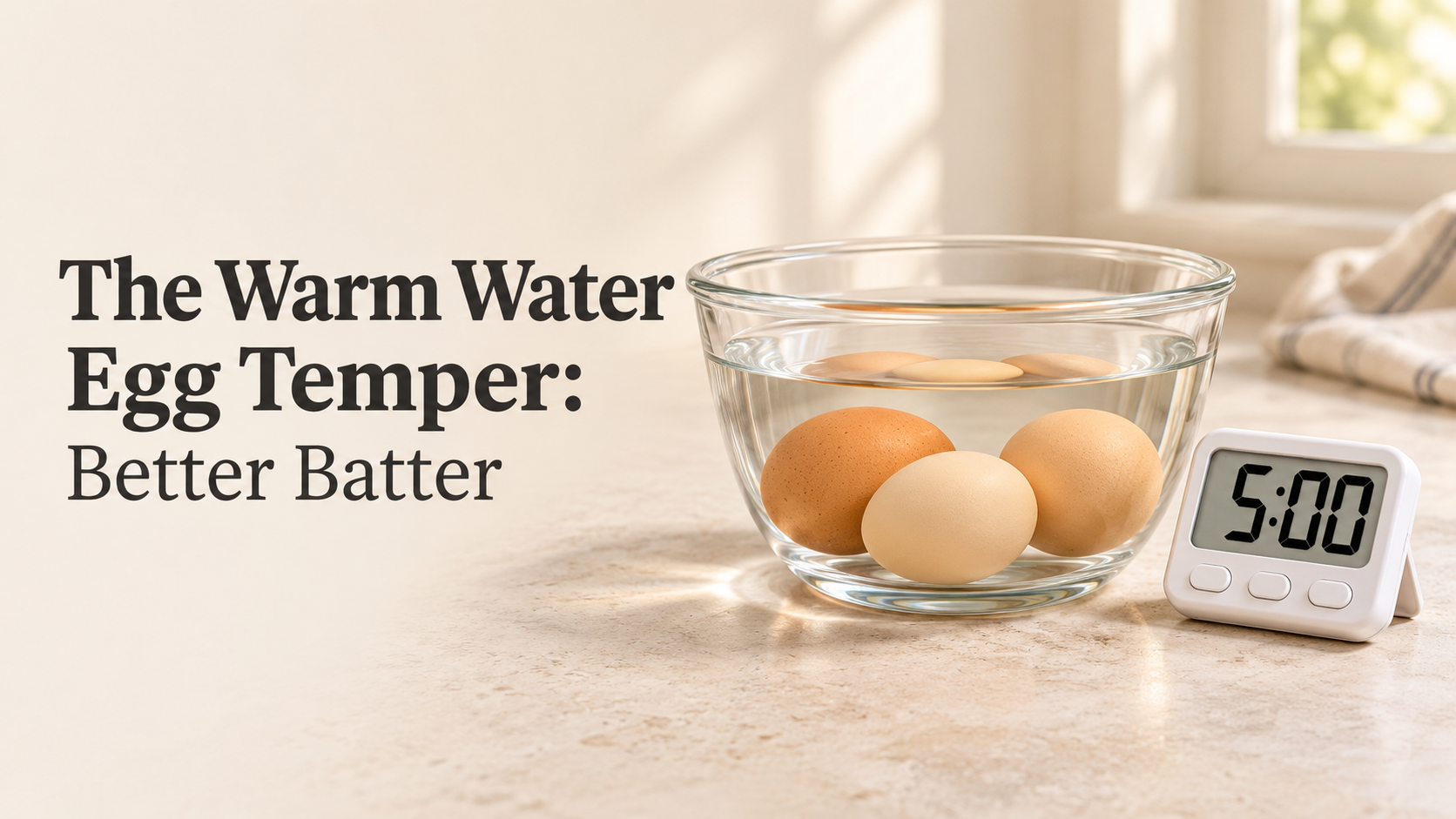
The Warm Water Soak If you forgot to take your eggs out, don’t panic. Place your cold eggs in a bowl of warm (not hot!) tap water for 5 to 10 minutes. This gentle heat will bring the internal temperature of the egg up to room temperature rapidly without starting the cooking process. You’ll have perfectly tempered eggs by the time you’ve finished measuring your dry ingredients.
Please enjoy our Kitchen and Cooking tips, some links on this page are affiliate links. If you buy through these links, we may earn a commission at no extra cost to you. This helps support our site and allows us to continue producing helpful Tips and other content.
The Science
Emulsification and Molecular Bonds Baking is a series of chemical emulsions. Room-temperature eggs (around 70°F) are much better at breaking down and combining with fats (like butter and sugar). Cold eggs are more viscous and “tight”; when they hit creamed butter, they lower the butter’s temperature back to a solid state, breaking the delicate air-bubble structure you worked so hard to create.
The Tool
Ceramic Egg Crate / Holder

To keep your eggs safe and organized on the counter while they temper, use a Flexzion Porcelain Egg Crate – 2 X 6-Egg Capacity. It’s much more stable than a bowl and looks beautiful on your kitchen counter.
Check Current Price and Availability at Amazon
KitchenandCookingTips.com participates in the Amazon Services LLC Associates Program, an affiliate advertising program designed to provide a means for sites to earn advertising fees by advertising and linking to Amazon.com