
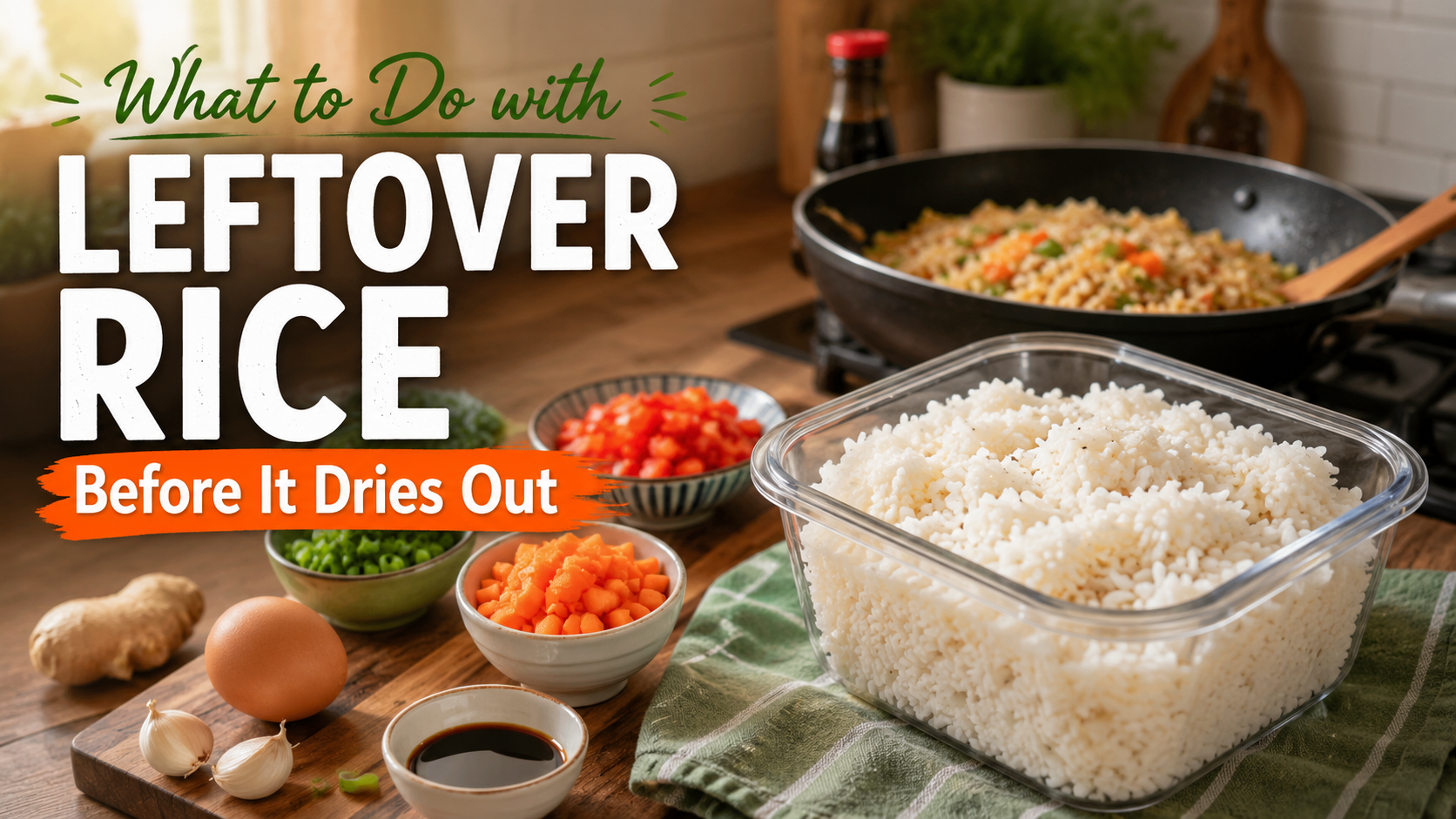
Welcome to Week 1 of The Use-It-Up Kitchen, a series built around one simple idea: good food does not have to begin with a brand-new grocery trip.
Sometimes it begins with the container in the back of the fridge.
This week, we are starting with leftover rice because almost every home cook has dealt with it. You make rice for dinner, everyone eats, and somehow there is either half a cup left or enough rice to feed the neighborhood. So into the fridge it goes. The next day it looks a little stiff. By day two, it is clumpy. By day three, you are wondering whether it is still useful or whether you missed your chance.
You probably have not missed your chance, but you do need a plan.
Leftover rice can become fried rice, soup, rice bowls, crispy rice cakes, quick casseroles, breakfast bowls, burrito filling, and even dessert. The trick is knowing what the rice needs. Sometimes it needs moisture. Sometimes it needs heat and oil. Sometimes it needs to be broken apart and treated like a base instead of a side dish.
Before we get into the fun part, let’s talk about the practical part. Rice is one of those leftovers that should be handled with a little care. The USDA advises refrigerating leftovers within two hours, keeping them in the refrigerator for three to four days, and reheating leftovers to 165°F, or 74°C. Frozen leftovers are best used within three to four months for quality. Rice can also be associated with Bacillus cereus, a bacteria that can survive in spore form and become a problem when cooked rice is left too long at room temperature. Reheating cannot always undo poor storage because some bacteria can produce toxins that high heat may not destroy.
That sounds serious because it is worth respecting. But it does not mean leftover rice is scary. It means leftover rice needs quick cooling, covered storage, and a reasonable deadline.
Now, let’s rescue that rice.
The Problem: Leftover Rice Dries Out Fast
Rice seems simple when it is fresh from the pot. It is warm, soft, and ready to soak up whatever sauce is on the plate. Once it cools, though, the texture changes. The grains firm up. Moisture moves. The starches settle. That is why refrigerated rice often turns hard or clumpy even when it was cooked perfectly the night before.
This is not a failure. It is just what cooked rice does.
The mistake many people make is trying to use leftover rice exactly like fresh rice. They scoop it beside chicken or vegetables and expect it to taste the same. Usually, it does not. It tastes dry, a little flat, and maybe even chewy in the wrong way.
Leftover rice needs a different job.
Think of it less like a side dish and more like an ingredient. Once you make that shift, the container in your fridge becomes useful again. Dry rice can crisp in a skillet. Clumpy rice can loosen in soup. Plain rice can soak up broth, sauce, eggs, butter, soy sauce, coconut milk, or salsa. It just needs direction.
The Rescue Principle: Decide Whether the Rice Needs Moisture, Heat, or Texture
Before choosing a recipe, look at the rice. This sounds basic, but it helps.
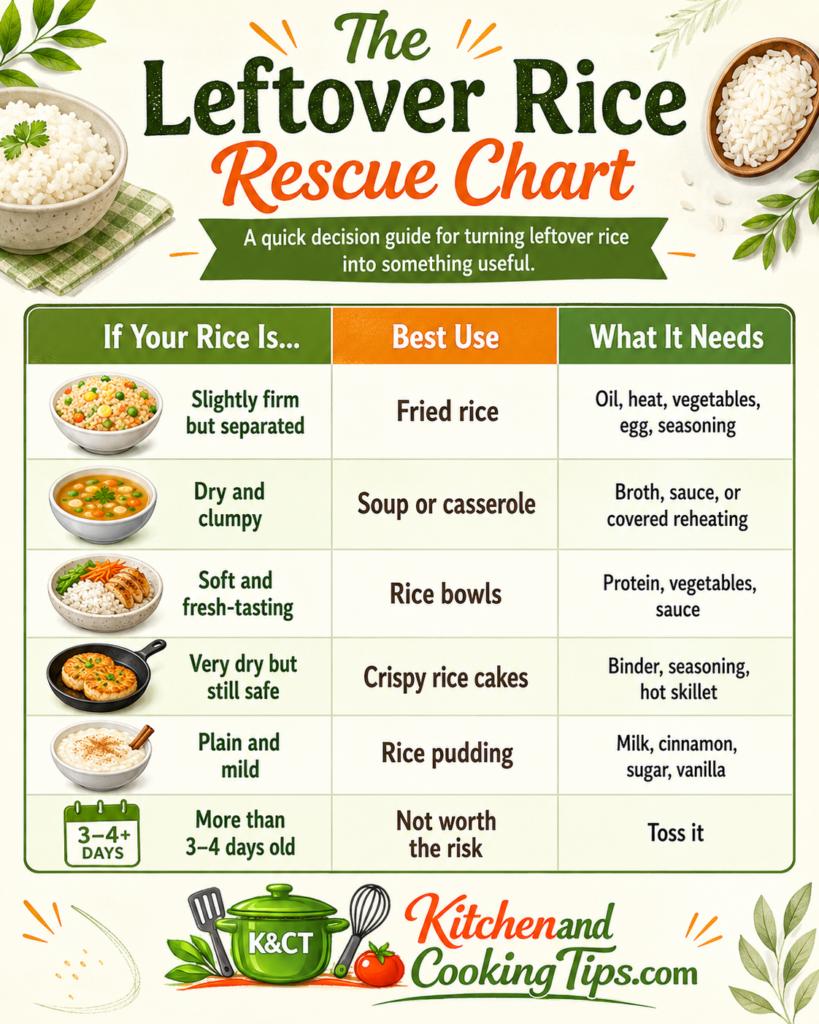
If the rice is only one day old and still soft, it can go almost anywhere. Use it in bowls, wraps, stir-fries, soups, or quick skillets.
If the rice is dry but still smells fresh and has been stored safely, it is perfect for fried rice or crispy rice cakes. A little dryness can actually help because the grains are less likely to turn mushy in the pan.
If the rice is very firm, add moisture. Soup, casseroles, rice pudding, or a covered microwave reheat with a splash of water can bring it back.
If the rice smells off, looks slimy, has mold, or you are not sure how long it sat out before being refrigerated, toss it. I know, nobody likes wasting food. But food safety wins that argument every time.
First, Store Leftover Rice the Right Way
Good leftover rice starts before the fridge door closes.
After dinner, do not leave the rice sitting on the counter while everyone talks, cleans up slowly, or comes back for “just one more bite.” Rice should be cooled and refrigerated within two hours, following general leftover safety guidance from the USDA. A shallow container helps it cool faster than a deep bowl. If you cooked a large batch, spread it out a bit before refrigerating instead of packing it into one tall mound.
Once cooled, cover it tightly. Airtight containers help prevent the rice from drying out and from picking up refrigerator smells. And yes, rice will absolutely absorb the mystery smell from last night’s onion-heavy leftovers if you let it.
Labeling helps too. You do not need anything fancy. A piece of tape with the day written on it is enough. “Monday rice” is much easier to trust than “I think this was from earlier this week?”
Kitchen Tip
If you often make too much rice, portion it before storing. One container can be for tomorrow’s lunch, one can be for fried rice, and one can go straight into the freezer. Future-you will appreciate this more than you think.
Rescue Meal 1: Classic Fried Rice
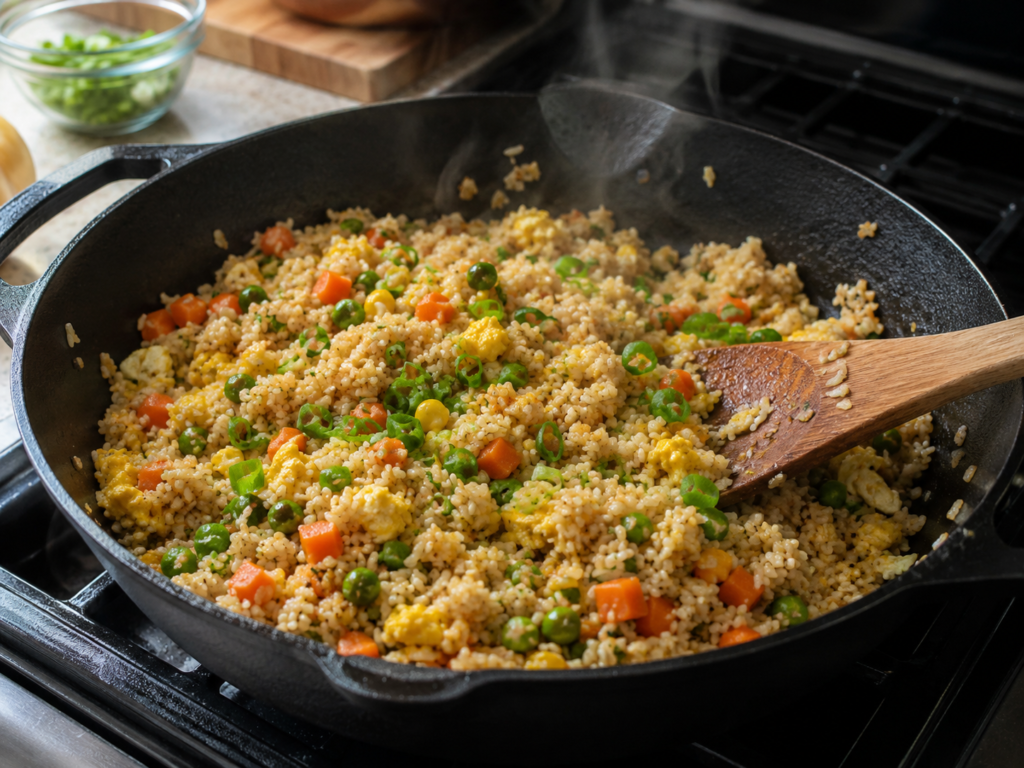
Fried rice is the leftover rice answer most people think of first, and for good reason. Chilled rice works better than fresh rice because it is firmer and less wet. Fresh rice can turn sticky in a hot skillet. Leftover rice has enough structure to separate, toast, and pick up flavor.
Start by breaking up the rice with your hands or a fork before it hits the pan. This step matters. If you add a cold brick of rice to the skillet, you will spend the next five minutes chasing clumps around with a spatula.
Heat a little oil in a skillet. Add diced onion, frozen peas and carrots, chopped bell pepper, leftover chicken, shrimp, tofu, or whatever cooked protein you have. Push everything to the side and scramble an egg in the pan, then add the rice. Stir until the rice is hot all the way through. Finish with soy sauce, garlic, ginger, sesame oil, chili crisp, or a splash of rice vinegar.
Do not overthink it. Fried rice is supposed to be practical.
Rescue Meal 2: Rice Bowls With Whatever Is in the Fridge
A rice bowl is less of a recipe and more of a method. That is why it belongs in The Use-It-Up Kitchen.
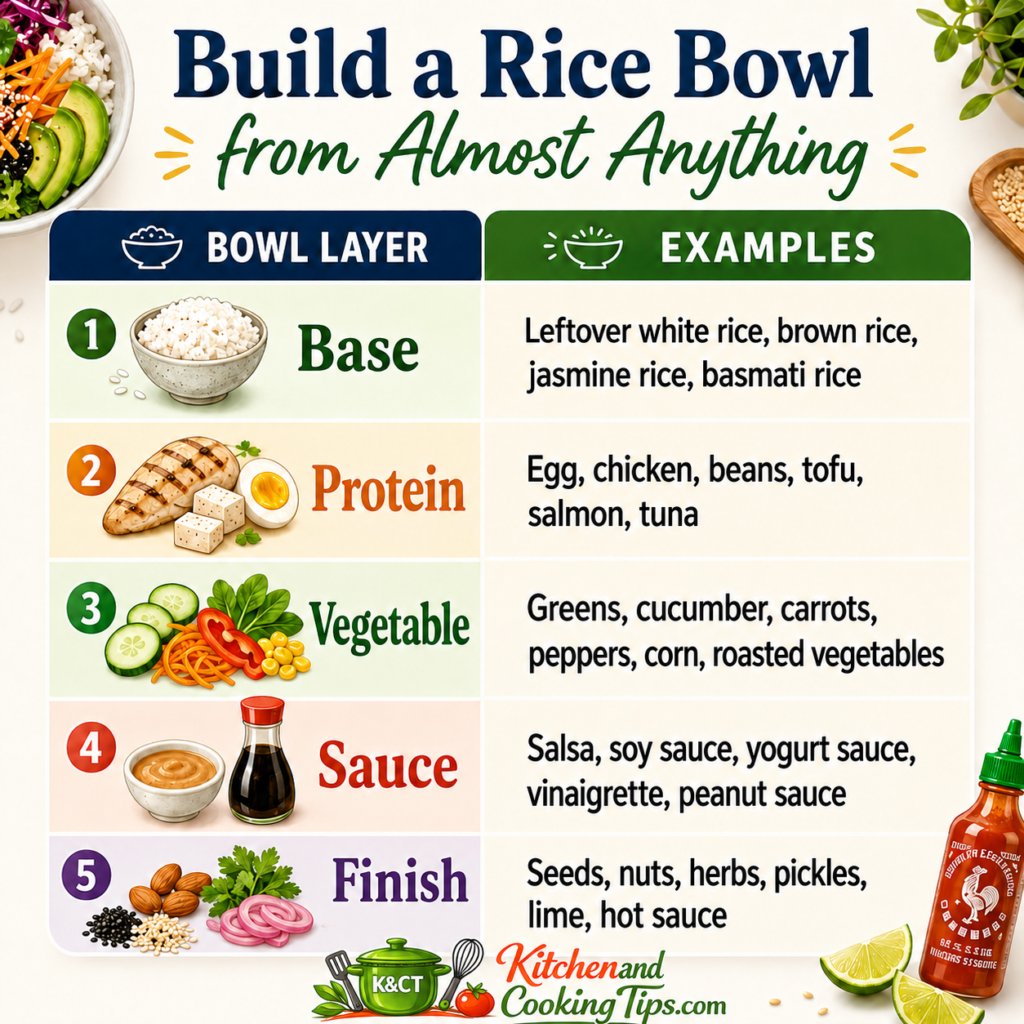
Start with reheated rice. Add protein, vegetables, sauce, and something with crunch. That is the whole idea. You can go in several directions depending on what you have.
Leftover grilled chicken can become a rice bowl with cucumbers, shredded carrots, lettuce, and a drizzle of ranch or garlic yogurt sauce. Black beans can become a bowl with salsa, corn, avocado, and a little cheese. A fried egg can sit over rice with sautéed spinach and hot sauce. Salmon, canned tuna, tofu, roasted vegetables, or even last night’s taco meat can all work.
The reason rice bowls are so helpful is that they make small leftovers feel intentional. A few spoonfuls of beans, half a cucumber, one cooked chicken thigh, and a handful of greens might not look like much on their own. Put them over rice with sauce, and suddenly dinner has a plan.
Rescue Meal 3: Soup That Turns Leftover Rice Soft Again
When rice is too dry to serve on its own, soup is your friend.
The broth does the work. It softens the rice, carries flavor, and turns a small amount of leftovers into a full meal. This is especially helpful when you have just one cup of rice left. One cup does not feel like much until it goes into a pot of soup.
For a fast chicken and rice soup, simmer broth with onion, carrot, celery, garlic, and cooked chicken. Add the leftover rice near the end so it warms through without turning mushy. If you like a thicker soup, let it simmer a little longer. If you want the rice grains to stay more distinct, add them just before serving.
You can also make tomato rice soup with canned tomatoes, broth, Italian seasoning, and a little Parmesan. Or go in a lemony direction with chicken broth, rice, egg, and lemon juice. Or make a simple vegetable rice soup with frozen mixed vegetables and a spoonful of pesto.
No one needs to know this started as a fridge rescue.
Kitchen Tip
Add leftover rice near the end of cooking unless you want a very thick soup. Rice continues absorbing liquid as it sits, so soup with rice can become stew-like by the next day. Not bad, just different.
Rescue Meal 4: Crispy Rice Cakes
Crispy rice cakes are what you make when the rice is dry, but you are not in the mood for fried rice.
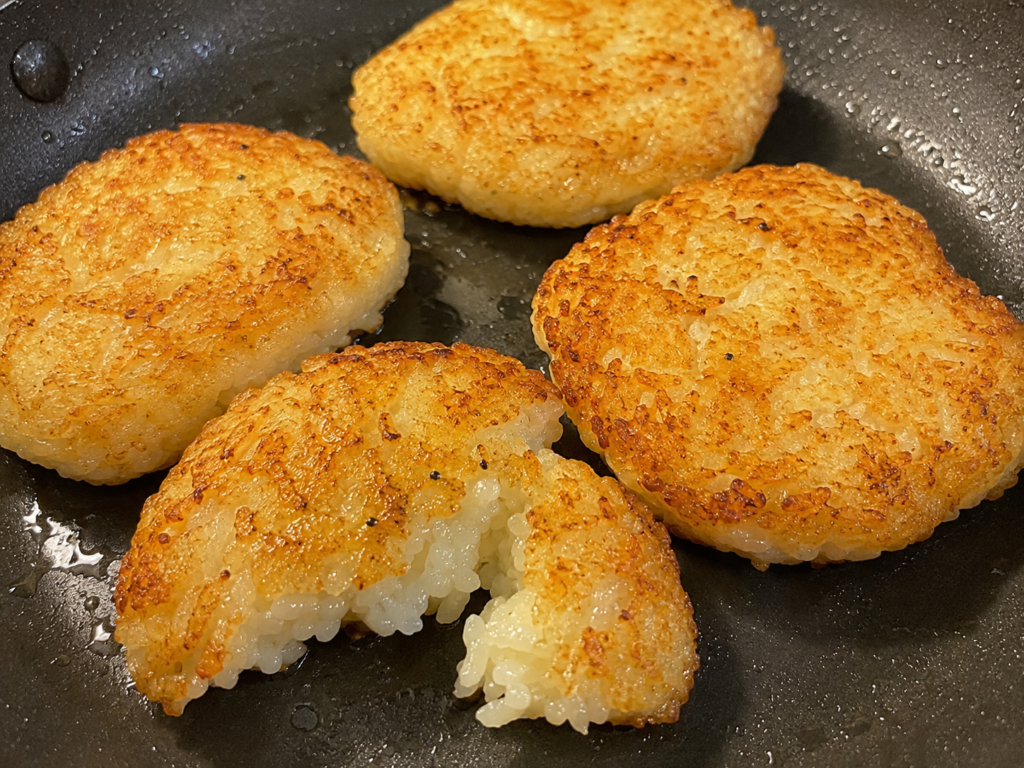
Mix leftover rice with an egg, a little flour or cornstarch, salt, pepper, and any seasoning you like. You can add shredded cheese, chopped green onions, garlic powder, cooked vegetables, or small pieces of leftover meat. Press the mixture into small patties and cook them in a lightly oiled skillet until the outside is crisp.
The outside should be golden. The inside should stay tender. If the patties are falling apart, add a little more binder. If they feel heavy or gummy, make them thinner next time.
Serve them with a dipping sauce. Soy sauce with a little honey and vinegar works. So does sour cream, salsa, spicy mayo, or yogurt sauce.
These are especially useful when you have plain rice and not much else. Add an egg and a few pantry seasonings, and you have something that feels like a snack, side dish, or light meal.
Rescue Meal 5: Burritos, Wraps, and Stuffed Peppers
Rice is a natural stretcher. That is not an insult. It helps a small amount of filling go further.
If you have leftover taco meat, beans, chicken, roasted vegetables, or scrambled eggs, add rice and wrap it in a tortilla. The rice absorbs sauce and makes the filling more substantial. You can also use it in stuffed peppers with tomato sauce, ground beef or beans, cheese, and seasoning.
This is one of the best ways to use rice when you also have tiny amounts of other leftovers. Half a cup of beans, a spoonful of corn, a little cheese, and one cup of rice can become two burritos. It is not fancy. It is dinner.
For freezer burritos, let the filling cool first. Wrap tightly, label, and freeze. Reheat until steaming hot throughout, and use a food thermometer when needed to confirm leftovers reach 165°F.
Rescue Meal 6: Rice Pudding for a Small Dessert
Leftover rice does not always have to become dinner. It can become dessert too.
Rice pudding is a good option when the rice is plain and unsalted, or at least only lightly salted. Warm the rice with milk, a little sugar, cinnamon, vanilla, and a pinch of salt. Stir until it thickens. Add raisins if you like them. Skip them if you do not. People have strong feelings about raisins, and this kitchen does not need unnecessary conflict.
You can make rice pudding with dairy milk, evaporated milk, coconut milk, or another milk you enjoy cooking with. The texture will vary, but the method is forgiving. If it gets too thick, add more milk. If it is too loose, simmer a little longer.
This is a good way to rescue a small amount of rice when you do not need another savory meal.
How to Reheat Leftover Rice Without Making It Worse
Reheating rice is where many people accidentally dry it out even more.
For the microwave, add a splash of water to the rice, cover it loosely, and heat until steaming hot. The cover traps steam, which helps soften the rice. Stir partway through if you are reheating a larger amount so there are no cold spots.
For the stovetop, add rice to a small pan with a splash of water or broth. Cover and warm gently, stirring once or twice. This works well when the rice is very dry.
For fried rice, skip the extra water. You want the rice to toast and separate. Use a hot pan, a little oil, and keep it moving.
From a food safety standpoint, leftovers should be reheated thoroughly to 165°F, or until hot and steaming, according to USDA guidance. Reheat the portion you plan to eat instead of warming the same container again and again. It keeps the texture better, and it is a cleaner habit.
When to Freeze Leftover Rice
If you know you will not use the rice within a few days, freeze it.
Freezing rice is one of the easiest kitchen habits to start. Portion the rice into freezer bags or containers while it is still within its safe storage window. Flatten bags so they freeze quickly and stack neatly. Label them with the date. A one-cup portion is useful for lunches. Two cups can become fried rice or a quick dinner base.
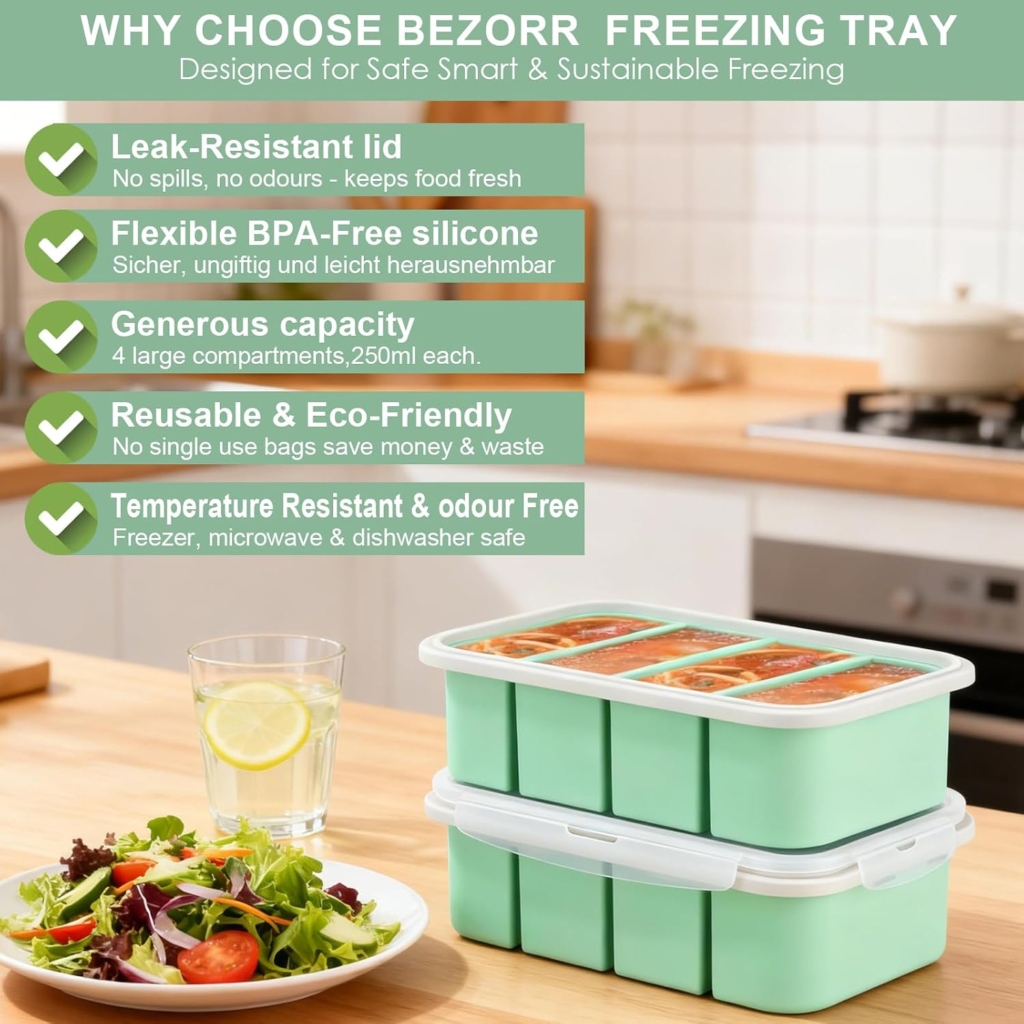
Awesome Food Grade Silicone that’s flexible, durable, non-toxic and tasteless. The Bezorr Silicone 1 Cup Freezer Trays that are Feezer, Microwave, and Dishwasher Safe.
Check Current Price at Amazon
Frozen rice can be reheated straight from the freezer with a splash of water. Microwave it covered, stir, and continue heating until it is hot throughout. You can also add frozen rice directly to soup.
This is a quiet little meal prep win. Not dramatic, but useful.
When Leftover Rice Should Be Thrown Away
Here is the part nobody loves, but it belongs in the article.
Throw leftover rice away if it sat at room temperature too long, if you do not know when it was cooked, if it smells sour or strange, if it feels slimy, or if there is any mold. Also toss it if it has been in the fridge beyond the safe leftover window. The USDA’s general guidance is three to four days for refrigerated leftovers.
Food waste matters, but so does common sense. The goal of The Use-It-Up Kitchen is not to use every bite no matter what. The goal is to use food wisely while it is still good.
That difference matters.
Final Thoughts: Leftover Rice Is Not Just Leftover Rice
Leftover rice is easy to overlook because it seems plain. It sits in the fridge quietly, not asking for much. But with a little direction, it can become the base of several meals.
The key is to stop thinking of it as yesterday’s side dish. Think of it as a starter ingredient. Add heat and oil, and it becomes fried rice. Add broth, and it becomes soup. Add sauce and vegetables, and it becomes a bowl. Add egg and a skillet, and it becomes crispy rice cakes. Add milk and cinnamon, and it becomes dessert.
That is the heart of The Use-It-Up Kitchen.
We are not trying to make cooking complicated. We are trying to notice what is already there. A container of rice. A few vegetables. One egg. A splash of sauce. Sometimes that is enough to keep dinner moving.
And honestly, on a busy night, that counts.