
The Problem
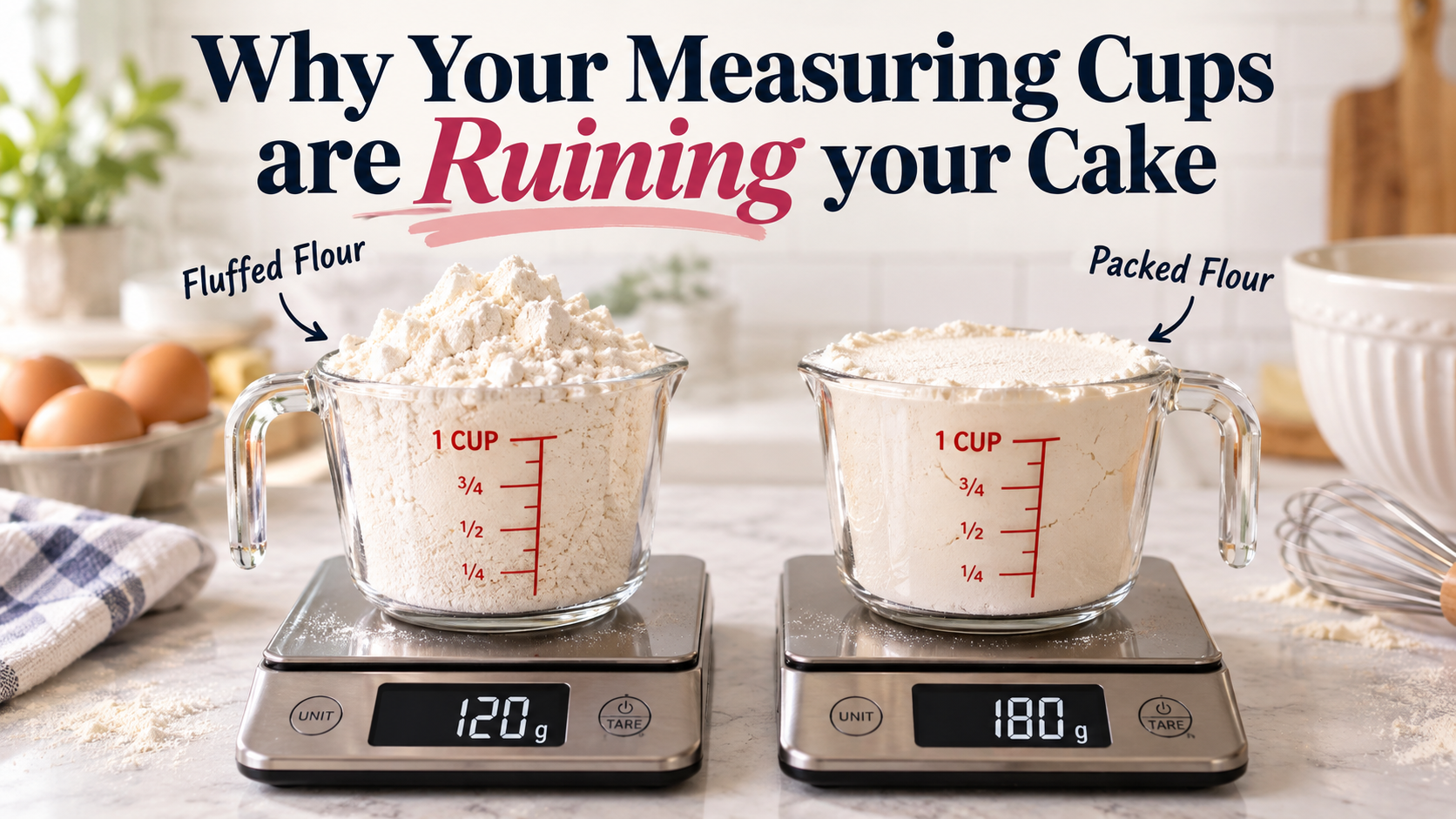
The “Variable” Cup of Flour Have you ever followed a recipe perfectly, but your bread came out dry or your cookies were “cakey” and stiff? The culprit is likely your measuring cup. Depending on how you scoop your flour—whether you pack it down or fluff it up—a “cup” of flour can weigh anywhere from 120 to 160 grams. That’s a 30% difference in flour, which is enough to ruin any delicate bake.
The Tip
Switch to Grams Stop measuring by volume and start measuring by weight. Place your bowl on a digital scale, hit “tare” (zero), and pour your ingredients in. Professional bakers never use cups because 100 grams of flour is always 100 grams of flour, regardless of how humid the air is or how tightly the flour was packed in the bag. It’s the only way to get 100% consistent results
Please enjoy our Kitchen and Cooking tips, some links on this page are affiliate links. If you buy through these links, we may earn a commission at no extra cost to you. This helps support our site and allows us to continue producing helpful Tips and other content.every time.
The Science
Density and Compression Flour is highly compressible. When it sits in a bag, it settles. If you “scoop” with a cup, you are packing the flour into the corners, increasing the density. Volume is a measurement of space, but weight is a measurement of mass. In the chemistry of baking, the ratio of mass (flour to liquid) is what determines the final texture of the crumb.
The Tool
The OXO Precision Kitchen Scale
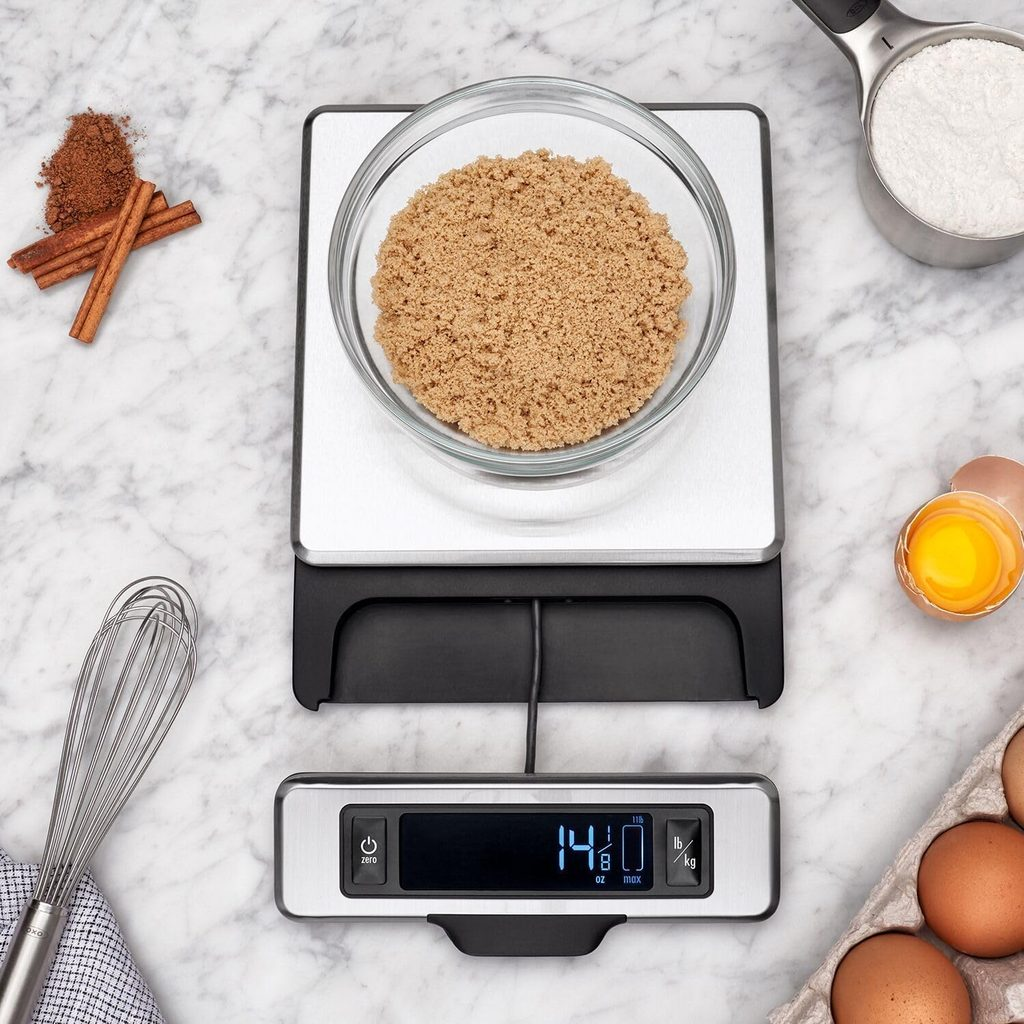
The OXO Good Grips Food Scale with Pull-Out Display is the best in the business. The display pulls away from the base so you can still read the weight even when you have a giant mixing bowl sitting on top of it.
Check Current Price & Availability at Amazon
KitchenandCookingTips.com participates in the Amazon Services LLC Associates Program, an affiliate advertising program designed to provide a means for sites to earn advertising fees by advertising and linking to Amazon.com