
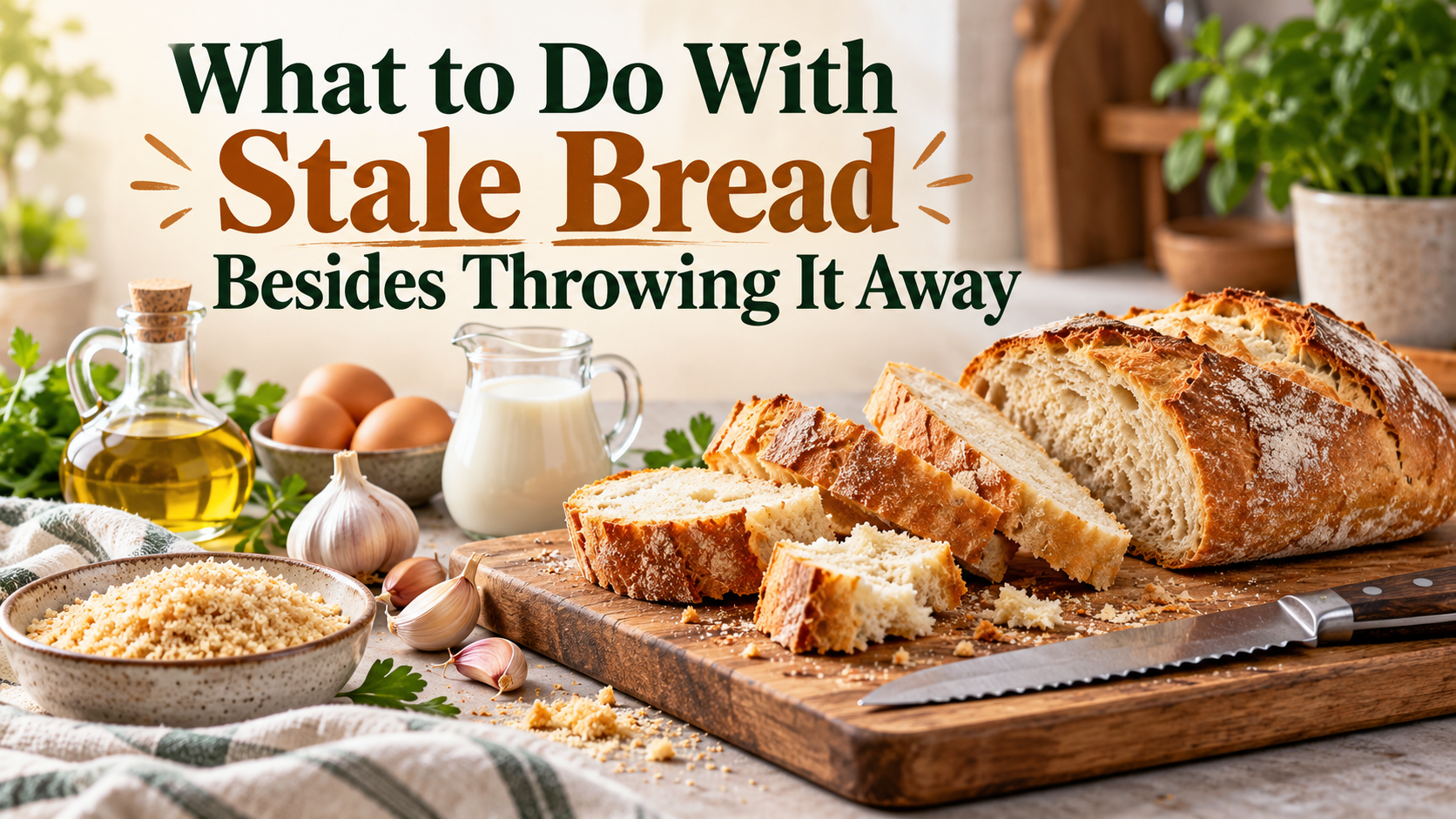
Welcome to Week 5 of The Use-It-Up Kitchen, where we take the food that is almost past its prime and give it one more good job.
This week, we are talking about stale bread.
Not moldy bread. That is different, and we will get to it. This is about bread that has gone dry, firm, chewy, or just not very exciting anymore. The loaf that was soft on Monday and somehow turned into a kitchen brick by Thursday. The baguette that was perfect with dinner but now sounds like a drumstick when you tap it on the counter. The last few sandwich slices nobody wants because the fresh loaf showed up.
Stale bread does not need to go straight into the trash. In many cases, stale bread is better than fresh bread for certain foods. Croutons, breadcrumbs, French toast, bread pudding, panzanella, stuffing, strata, meatballs, and soup all depend on bread that can absorb flavor without falling apart.
That is the shift.
Fresh bread is for sandwiches. Stale bread is for soaking, crisping, thickening, binding, and stretching meals. Once you understand that, a dry loaf becomes useful again.
The Problem: Bread Goes Stale Before Most People Finish It
Bread is one of those foods we buy with confidence. It seems easy to use. Toast, sandwiches, garlic bread, breakfast, lunch, dinner. No problem.
Then real life happens.
You make fewer sandwiches than expected. Dinner plans change. Someone opens a second loaf before finishing the first one. The bakery bread that smelled amazing at the store starts getting hard on the counter. And if you live alone or have a small household, finishing a whole loaf before it changes texture can feel like a small race you did not agree to enter.
Staling is not the same as spoiling. Bread can become dry and firm while still being safe to use. That dry texture is annoying for a sandwich, but it is useful for cooking. Stale bread can absorb eggs, milk, broth, oil, tomato juice, butter, and sauce. It can also crisp beautifully in the oven or skillet.
The real problem is not stale bread. The real problem is waiting too long and letting stale bread become moldy bread.
That is the line we do not cross.
The Rescue Principle: Dry Bread Wants Moisture, Fat, Heat, or a New Texture
Stale bread usually needs one of four things.
It may need moisture, like milk for French toast, broth for stuffing, tomato juice for panzanella, or soup for a bread-thickened stew.
It may need fat, like olive oil for croutons, butter for garlic bread, or pan drippings for stuffing.
It may need heat, especially if you are trying to crisp it or refresh it.
Or it may need a new texture, which is where breadcrumbs come in. Once bread is too dry for slicing, it can still be ground, toasted, seasoned, and stored.
The key is to stop asking stale bread to act fresh. It probably cannot. Instead, give it a job where dryness is useful.
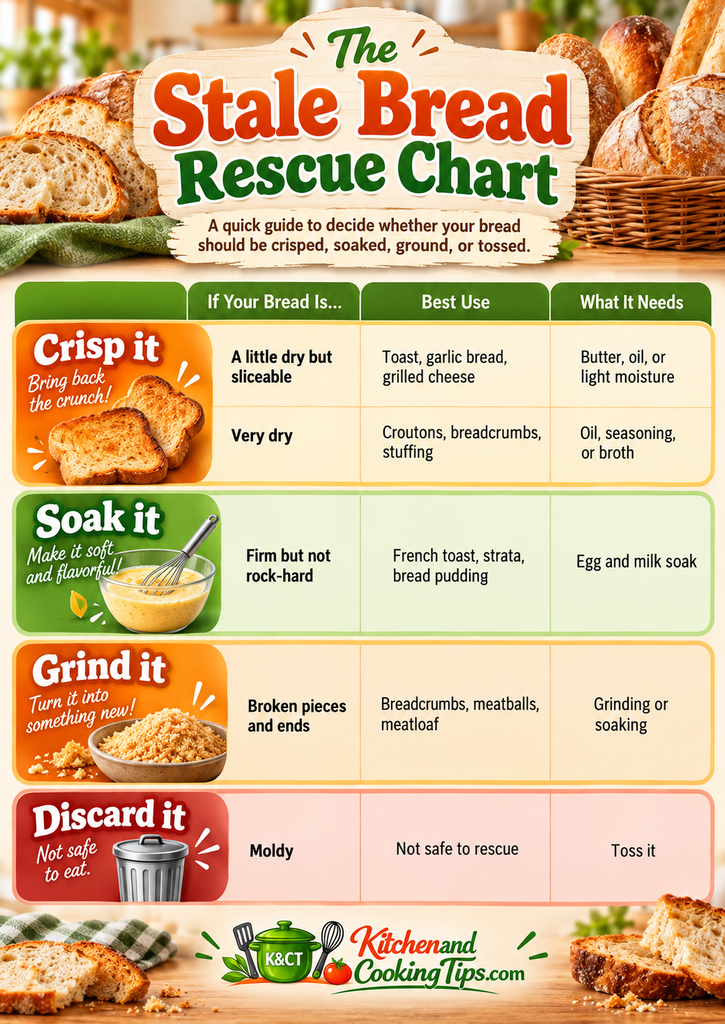
The Stale Bread Rescue Chart
First, Know the Difference Between Stale and Moldy
This part matters.
Stale bread is dry, firm, or tough. It may be unpleasant for a sandwich, but it can still be useful in cooked dishes.
Moldy bread is not a rescue project. The USDA says bread and baked goods with mold should be discarded because porous foods can be contaminated below the surface. Cutting away the visible mold is not enough because mold can grow into food where you cannot see it.
So if there is mold on one slice, the safe move is to throw away the bread. I know. It feels wasteful. But the goal of The Use-It-Up Kitchen is to use food while it is still usable, not to talk ourselves into risky choices.
Quick Rule
If the bread is dry, rescue it.
If the bread is moldy, damp in a strange way, sour-smelling, or fuzzy, toss it.
No heroic bread-saving needed.
Store Bread So It Has a Better Chance
Bread storage depends on how soon you plan to use it.
For short-term use, bread usually does best at room temperature in a bread box, original bag, or wrapped storage that protects it from drying out too fast. For longer storage, freezing is usually the better move. Refrigeration can slow mold growth, but it can also make bread stale faster; University of Wyoming Extension notes that refrigeration prevents mold but speeds the staling process.
That is why the freezer is the better habit for households that do not finish bread quickly. Serious Eats also explains that freezing slows staling much better than refrigeration, especially when bread is well wrapped.
If you freeze bread, slice it first if possible. That way, you can pull out only what you need. Wrap it tightly or use a freezer bag with the air pressed out. Label it if you are the kind of person who forgets what is in the freezer. Which is most of us, at least occasionally.
Kitchen Tip
Before bread goes stale, freeze half the loaf. Do it on the day you buy it, not three days later when the slices already feel tired. Freezing fresh bread gives you better bread later.
Rescue Meal 1: Homemade Croutons
Croutons are one of the easiest stale bread wins.
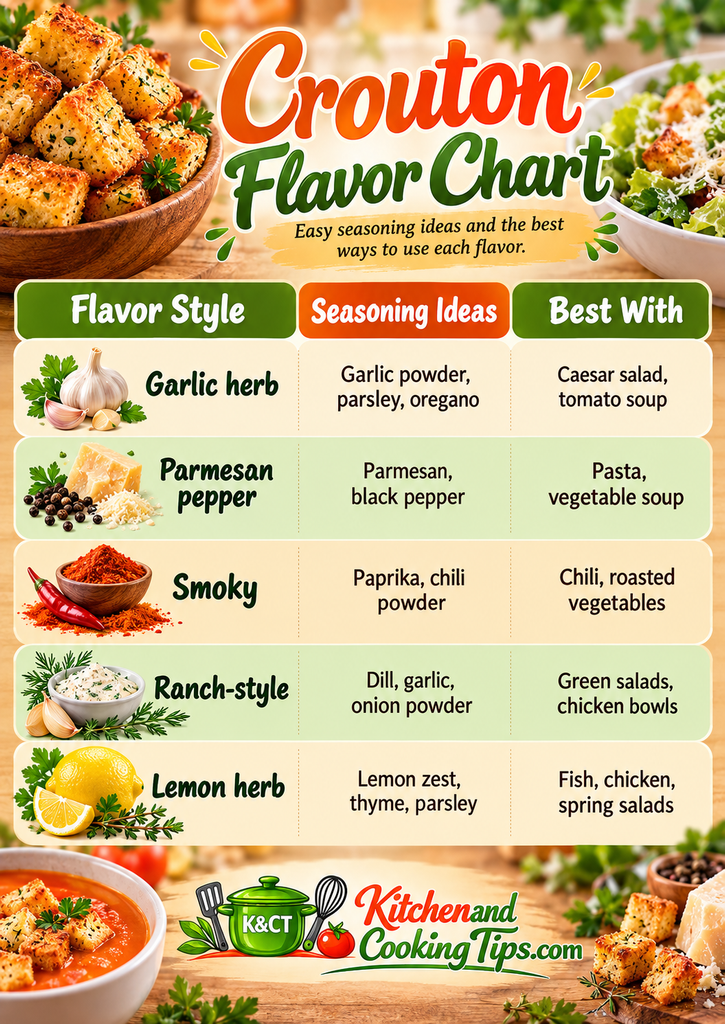
Cut the bread into cubes. Toss it with olive oil or melted butter, salt, pepper, garlic powder, Italian seasoning, paprika, Parmesan, or whatever seasoning fits the meal. Spread the cubes on a baking sheet and bake until crisp.
You can use sandwich bread, sourdough, baguette, rolls, buns, or dinner bread. Different breads make different croutons, and that is fine. Sandwich bread makes lighter croutons. Sourdough makes chewy-crisp croutons. Baguette makes sturdy ones that hold up well in soup.
Croutons are not just for salad. Add them to tomato soup, creamy vegetable soup, scrambled eggs, roasted vegetables, casseroles, or pasta. They bring crunch, which is often what leftover meals need.
Crouton Flavor Chart
Rescue Meal 2: Breadcrumbs
Breadcrumbs are what you make when the bread is too dry for anything else but still safe to eat.
Tear or cut the bread into pieces and pulse it in a food processor. If you do not have one, grate very dry bread on a box grater or put it in a bag and crush it with a rolling pin. Not elegant, but it works.
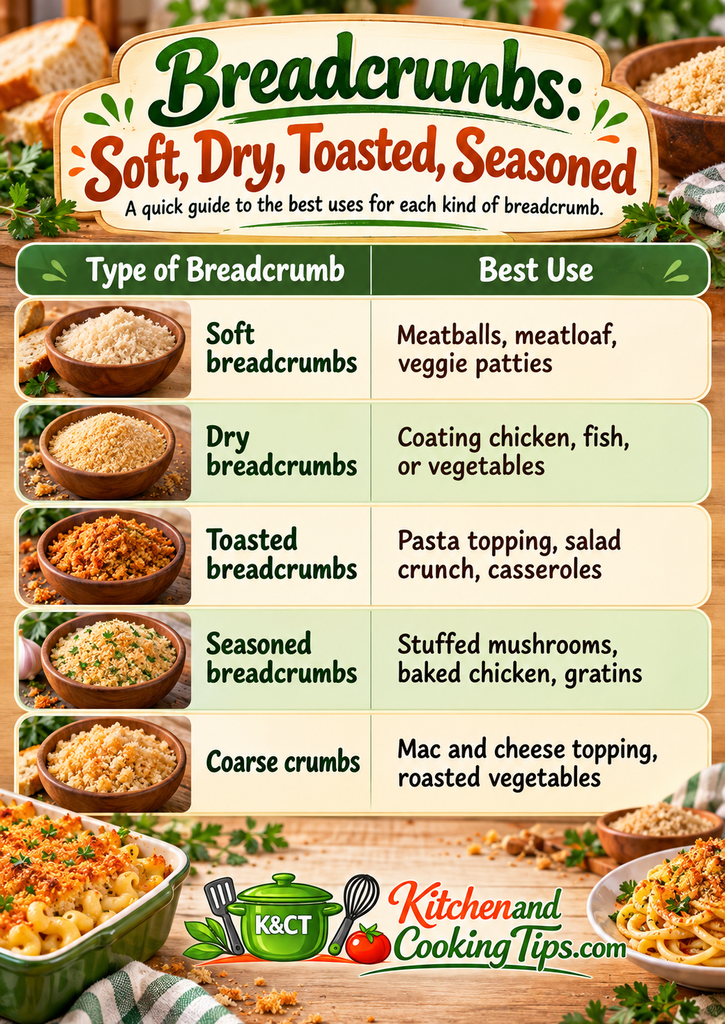
You can make soft breadcrumbs from bread that is still a little tender, or dry breadcrumbs from toasted bread. Dry breadcrumbs store better and are useful for topping casseroles, coating chicken, thickening meatballs, and adding crunch to pasta.
To make seasoned breadcrumbs, toast them lightly in a skillet with olive oil, garlic, salt, pepper, and herbs. Store cooled breadcrumbs in an airtight container. For longer storage, freeze them.
Breadcrumb Use Chart
Rescue Meal 3: French Toast
French toast is a classic stale bread rescue because dry bread absorbs the egg mixture better than fresh bread.
Fresh bread can get soggy fast. Stale bread has structure. It can soak up milk, egg, vanilla, cinnamon, and a little sugar without falling apart immediately. That is the whole point.
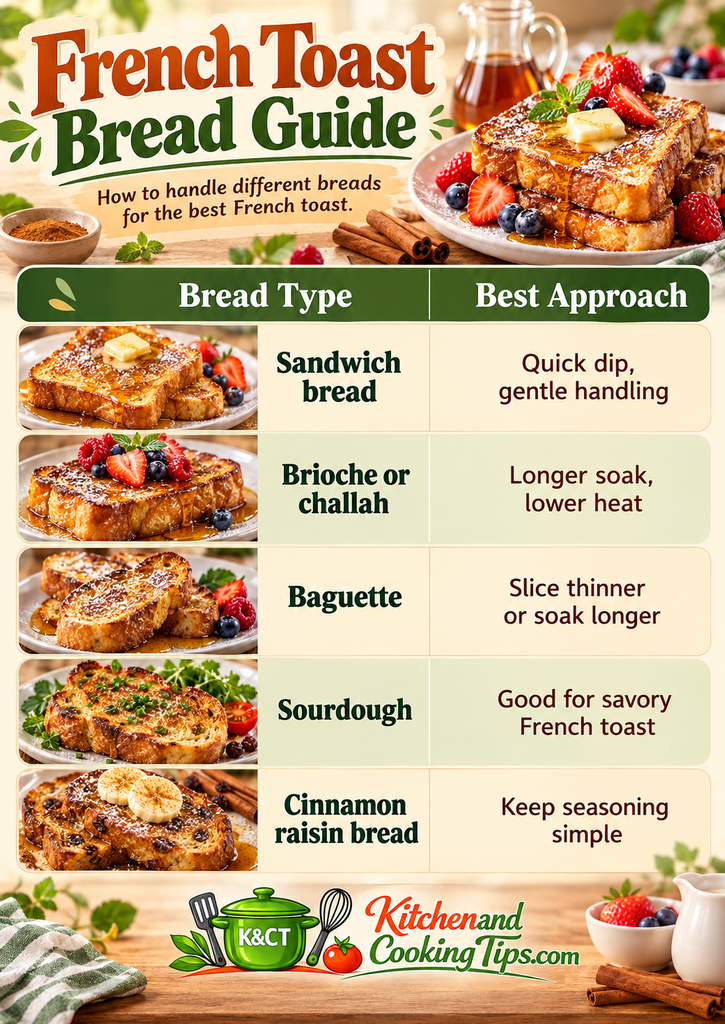
For a basic version, whisk eggs with milk, cinnamon, vanilla, and a pinch of salt. Dip slices of stale bread into the mixture, then cook them in a buttered skillet until browned on both sides. Thicker bread may need a longer soak. Thin sandwich bread needs less time.
French toast does not have to be only sweet. You can make a savory version with eggs, milk, salt, pepper, cheese, herbs, and a little mustard. Serve it with bacon, tomatoes, greens, or sautéed mushrooms.
French Toast Bread Guide
Rescue Meal 4: Bread Pudding
Bread pudding is what stale bread wants to be when it grows up.
It uses dry bread, milk, eggs, sugar, and flavoring. The bread soaks up the custard, then bakes into something soft in the center and browned on top. It is useful because it can take a lot of bread at once.
Cube the bread and place it in a baking dish. Whisk milk, eggs, sugar, vanilla, cinnamon, and a pinch of salt. Pour it over the bread and let it sit so the cubes absorb the liquid. Bake until set.
You can add raisins, chocolate chips, apples, berries, nuts, coconut, or leftover holiday bread. Or keep it plain. Plain is underrated.
Savory bread pudding works too. Use eggs, milk, cheese, cooked vegetables, sausage, ham, herbs, and pepper. It becomes closer to a breakfast casserole or strata, which brings us to the next rescue meal.
Sweet or Savory Bread Pudding Ideas
| Style | Add-Ins |
|---|---|
| Classic sweet | Cinnamon, vanilla, raisins |
| Apple | Diced apples, brown sugar, nutmeg |
| Chocolate | Chocolate chips, cocoa, orange zest |
| Berry | Blueberries, raspberries, lemon zest |
| Savory | Cheese, spinach, mushrooms, sausage |
| Breakfast-style | Eggs, ham, cheddar, green onions |
Rescue Meal 5: Strata or Savory Breakfast Bake
A strata is basically a savory bread casserole. It is also one of the best ways to use stale bread, eggs, cheese, and small bits of leftover vegetables or meat.
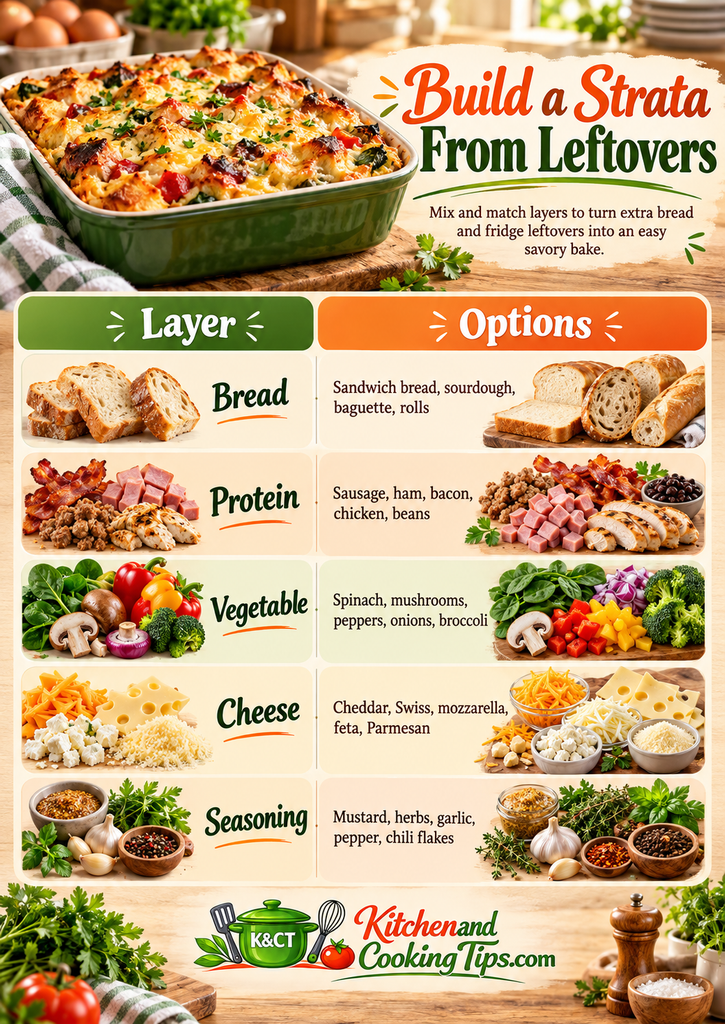
Cube the bread and place it in a greased baking dish. Add cooked vegetables, shredded cheese, and cooked sausage, bacon, ham, or chicken if you have it. Whisk eggs with milk, salt, pepper, and seasonings. Pour the mixture over the bread and let it soak before baking.
This is useful for brunch, but it is also a good dinner. Add a salad or fruit and call it done.
The best part is that strata welcomes leftovers. Half an onion, a handful of spinach, a few mushrooms, a little cheese, and the end of a loaf can become a meal. It feels more intentional than it has any right to feel.
Strata Builder Chart
Rescue Meal 6: Panzanella or Bread Salad
Panzanella is a bread salad, and stale bread is the reason it works.
Fresh bread can turn mushy when mixed with juicy tomatoes and dressing. Stale bread holds its shape while soaking up flavor. That gives you chewy, flavorful pieces instead of a soggy mess.
A simple version uses cubed stale bread, chopped tomatoes, cucumber, onion, basil, olive oil, vinegar, salt, and pepper. Let it sit for a few minutes so the bread absorbs the tomato juices and dressing. Not too long, though. You want softened bread, not bread paste.
You can add mozzarella, chickpeas, grilled chicken, roasted peppers, olives, or leftover vegetables. This is especially useful in summer when tomatoes are good and the bread is not.
Panzanella Formula
| Ingredient | Purpose |
|---|---|
| Stale bread cubes | Soak up dressing and tomato juice |
| Tomatoes | Provide moisture and acidity |
| Cucumber or peppers | Add crunch |
| Onion | Adds bite |
| Olive oil and vinegar | Make the dressing |
| Herbs | Freshen the salad |
| Protein, optional | Makes it a meal |
Rescue Meal 7: Stuffing or Dressing
Stuffing is not only for holidays. At its core, it is seasoned stale bread with moisture.
Cube stale bread and let it dry further if needed. Cook onion and celery in butter, then add herbs such as sage, thyme, parsley, or rosemary. Toss with the bread and enough broth to moisten it. Bake until the top is crisp and the center is tender.
You can serve it with roast chicken, pork chops, turkey cutlets, sausages, or roasted vegetables. You can also add mushrooms, apples, cranberries, sausage, nuts, or cooked greens.
This is a good use for mixed bread ends. A few slices of sandwich bread, half a roll, and the end of a baguette can all go into the same dish. The texture may vary, but that is not a problem. Actually, it can be nice.
Kitchen Tip
Add broth gradually. Stale bread absorbs liquid at different speeds depending on the type. It is easier to add more broth than to fix stuffing that turned into wet bread soup.
Rescue Meal 8: Meatballs, Meatloaf, and Veggie Patties
Bread is one of the quiet helpers in meatballs and meatloaf.
When stale bread is soaked in milk, broth, or water, it becomes a panade. That mixture helps keep ground meat tender and helps bind everything together. It is a good way to use bread ends that are too small for toast.
Tear the bread into pieces and soak it until soft. Mash it, then mix it with ground beef, turkey, chicken, pork, lentils, or beans. Add egg, seasoning, onion, garlic, and herbs.
This also works for veggie patties. Soft breadcrumbs can help bind mashed beans, lentils, cooked vegetables, and eggs. Dry breadcrumbs can coat the outside before cooking.
Binder Guide
| What You’re Making | Bread Use |
|---|---|
| Meatballs | Soaked bread for tenderness |
| Meatloaf | Soft breadcrumbs or panade |
| Turkey burgers | Small amount of soft crumbs |
| Salmon cakes | Dry breadcrumbs for structure |
| Bean patties | Breadcrumbs to bind and coat |
| Stuffed peppers | Breadcrumbs in filling or topping |
This is not the showiest stale bread use, but it is one of the most practical.
Rescue Meal 9: Garlic Bread, Crostini, and Toasts
Sometimes stale bread only needs heat, fat, and a little attention.
Slice the bread. Brush or spread it with butter or olive oil. Add garlic, salt, herbs, cheese, or chili flakes. Toast it in the oven until crisp around the edges.
This works with baguette, Italian bread, sandwich bread, rolls, hamburger buns, hot dog buns, and even slightly stale flatbread. Yes, hamburger buns can become garlic bread. No one needs to know that was not the original plan.
Crostini are just small toasts with toppings. Add ricotta and honey, tomato and basil, beans and olive oil, tuna salad, roasted peppers, scrambled eggs, or leftover chicken. Suddenly stale bread becomes an appetizer, lunch, or snack.
Toast Topper Ideas
| Toast Base | Topping |
|---|---|
| Garlic toast | Soup, pasta, salad |
| Ricotta toast | Honey, berries, pepper |
| Bean toast | White beans, olive oil, herbs |
| Tomato toast | Chopped tomatoes, basil, vinegar |
| Chicken toast | Chicken salad or shredded chicken |
| Egg toast | Scrambled egg, spinach, hot sauce |
Rescue Meal 10: Bread-Thickened Soup
Stale bread can thicken soup in a way that feels rustic and satisfying.
Tomato soup, vegetable soup, bean soup, onion soup, and ribollita-style soups all work with stale bread. You can add cubes to the bottom of the bowl and ladle hot soup over them, or simmer bread directly in the pot until it breaks down and thickens the broth.
This is a good use for bread that is too hard for sandwiches but not too hard to absorb liquid. The bread softens and makes the soup more filling.
For a simple tomato bread soup, simmer canned tomatoes, broth, garlic, onion, olive oil, and herbs. Add torn stale bread and let it soften. Finish with Parmesan, basil, or a drizzle of olive oil.
It is humble food. Good humble, not sad humble.
How to Refresh Stale Bread
Sometimes you do not need a whole recipe. You just want the bread to taste closer to fresh.
For crusty bread, lightly moisten the outside with water and warm it in the oven until the crust crisps and the inside softens. This works best with bread that is stale but not moldy and not completely dried out.
For sliced sandwich bread, toasting is usually the better answer. Toast gives dry bread a reason to exist. Use it for open-faced sandwiches, breakfast toast, grilled cheese, breadcrumbs, or croutons.
For rolls or buns, wrap them in foil and warm them in the oven. Add a little butter afterward if needed.
This will not make stale bread brand-new again, but it can bring it back enough for dinner.
Storage and Safety Note: When to Use, Freeze, or Toss
Bread should be handled based on condition, not just age.
If bread is dry but otherwise normal, use it in cooked or toasted recipes. If bread has mold, discard it. USDA guidance specifically says bread and baked goods should be thrown away when moldy because porous foods can be contaminated beneath the surface.
For storage, keep bread at room temperature for short-term use and freeze it for longer storage. Refrigeration can slow mold but may speed staling, which makes it a poor choice if texture matters.
Freeze bread before it becomes stale if you know you will not use it quickly. Slice first when possible. Wrap tightly. Label the bag. Use frozen slices straight from the freezer for toast, grilled cheese, croutons, breadcrumbs, or quick garlic bread.
Stale Bread Use-It-Up Timeline
| Timing | Best Action |
|---|---|
| Day 1 | Use fresh for sandwiches, toast, or serving with dinner |
| Day 2 | Make grilled cheese, garlic bread, or crostini |
| Day 3 | Make French toast, strata, panzanella, or stuffing |
| Day 4 | Make croutons, breadcrumbs, or bread pudding |
| Before it molds | Freeze slices, cubes, or breadcrumbs |
| Too late | Toss if moldy, fuzzy, sour-smelling, or damp in a strange way |
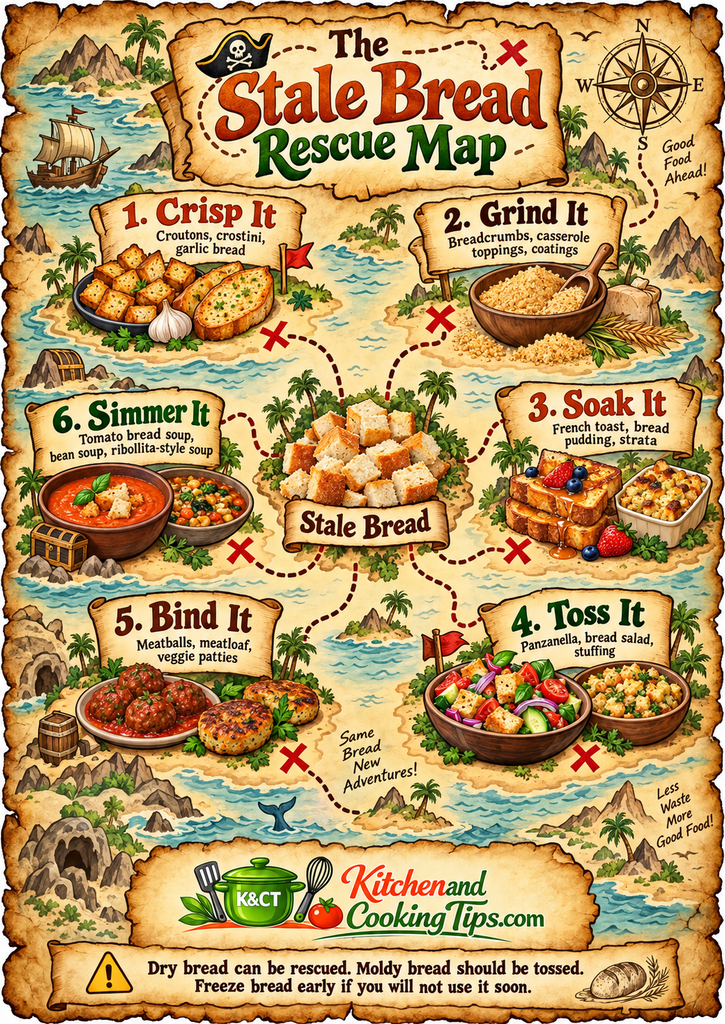
The Stale Bread Rescue Map
Practical Stale Bread Meal Ideas
| What You Have | What to Make |
|---|---|
| Stale sandwich bread + eggs + milk | French toast |
| Stale baguette + olive oil | Croutons |
| Bread ends + food processor | Breadcrumbs |
| Stale bread + tomatoes + vinegar | Panzanella |
| Stale bread + eggs + cheese | Strata |
| Stale bread + milk + sugar | Bread pudding |
| Stale bread + broth + herbs | Stuffing |
| Bread scraps + ground meat | Meatballs or meatloaf |
| Stale rolls + garlic butter | Garlic bread |
| Stale bread + tomato soup | Bread-thickened soup |
Final Thoughts: Stale Bread Still Has Work to Do
Stale bread is easy to dismiss because it no longer does the job we bought it for. It may not make a great sandwich anymore. It may not be soft enough for the table. It may look like one more thing that needs to be thrown away.
But dry bread still has plenty of work left.
It can become croutons, breadcrumbs, French toast, bread pudding, strata, stuffing, panzanella, garlic bread, meatballs, or soup. In some of those dishes, stale bread is not a backup plan. It is the better choice.
That is the heart of The Use-It-Up Kitchen. Look at what is still good. Match it to the right method. Use it before it crosses the line.
And when bread does cross the line into mold, toss it and move on. No guilt spiral required.
A dry loaf can still help with dinner. A few bread ends can still add crunch. A forgotten baguette can still become something worth eating.
That is a small kitchen win, but it is a real one.