
Welcome to Week 2 of The Use-It-Up Kitchen, where the goal is simple: use what you already bought before it turns into guilt in the back of the fridge.
This week, we are talking about spinach.
You know the bag. It looks useful at the store. It feels like the kind of thing a responsible person buys. You imagine salads, smoothies, omelets, maybe a nice pasta. Then three days later, the bag is half full, the leaves are pressed against the plastic, and one corner is starting to look suspiciously wet.
Spinach has a short window. It can go from fresh and useful to limp and slimy faster than most people expect. That does not mean it is a bad purchase. It just means spinach needs a plan.
The good news is that spinach is one of the easiest vegetables to use quickly because it shrinks so much when cooked. A big handful can disappear into eggs, soup, pasta, rice, beans, sauces, wraps, casseroles, and smoothies. You do not always need a spinach recipe. Sometimes you just need a place to tuck it in.
That is what this guide is for.
The Problem: Fresh Spinach Has a Short Attention Span
Fresh spinach is delicate. The leaves bruise easily, hold moisture, and collapse quickly once they begin to wilt. A bag that looked perfect on Monday can look questionable by Thursday if it is stored too wet or forgotten under heavier groceries.
When buying spinach, look for leaves that are fresh-looking rather than yellowing or limp. Utah State University Extension recommends avoiding spinach with yellowing or limp leaves, which is a simple shopping rule that saves trouble later.
The bigger issue is moisture. Spinach does not like sitting in trapped condensation. Too much wetness inside the bag encourages slimy spots. On the other hand, if the leaves dry out completely, they wilt and lose their appeal. Spinach wants the annoying middle ground: cool, dry enough, and used soon.
That is where many people get stuck. They buy spinach with good intentions, then wait for the “right” salad moment. Meanwhile, the spinach is not waiting. It is aging.
So instead of asking, “What salad should I make?” it helps to ask a better question: “Where can I add a handful of spinach today?”
The Rescue Principle: Use Spinach by Texture, Not Just by Recipe
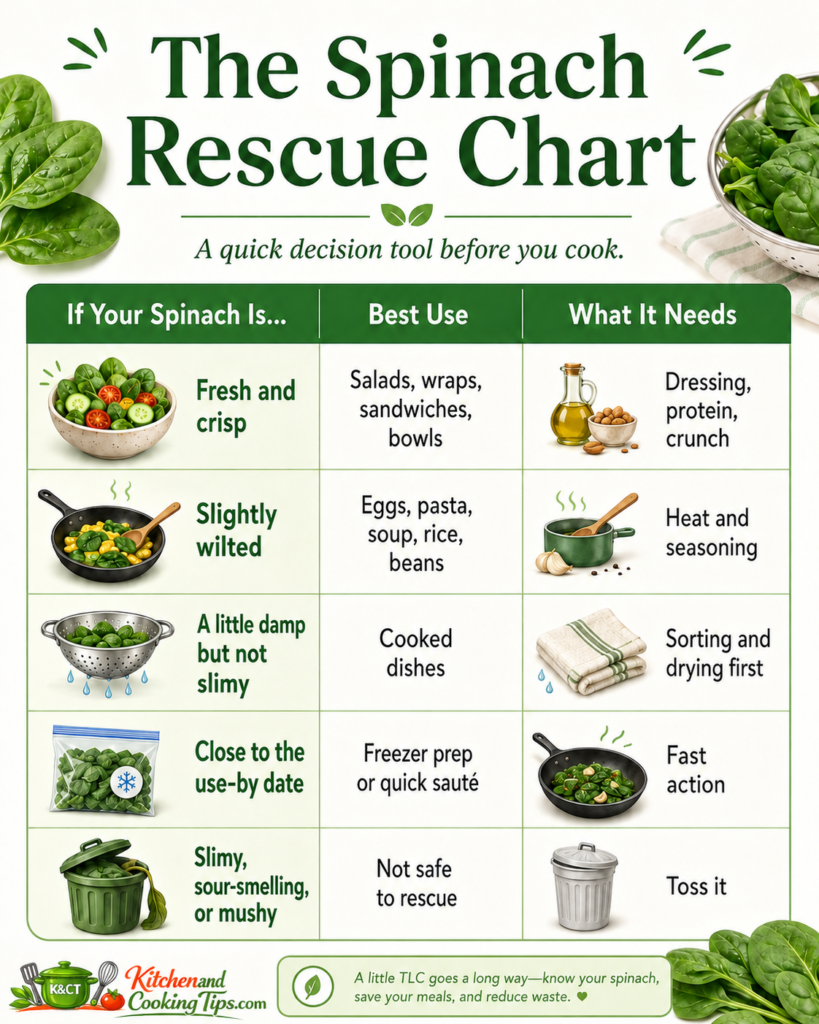
The best way to rescue spinach is to match its condition to the right use.
Fresh, crisp spinach is best for salads, wraps, sandwiches, and bowls. Slightly wilted spinach is still useful in cooked dishes. Spinach with a few tired leaves can be sorted, trimmed, and cooked into pasta, eggs, soup, or skillet meals.
Slimy spinach is different. If the leaves are mushy, smell bad, or feel slick, they should be thrown away. Do not try to save spinach that has clearly spoiled. The Use-It-Up Kitchen is about reducing waste, not gambling with dinner.
Once spinach starts looking tired, cooking is usually the answer. Heat makes the texture less important and turns a large volume of leaves into a small, useful amount. That is why spinach works so well in quick meals. You can add it at the end, let it wilt, and suddenly you have more color, more vegetables, and less food waste.
First, Store Spinach So It Has a Fighting Chance
Spinach often fails before you even cook it because it is stored poorly. That is not a personal flaw. It is just a common kitchen thing.
For bagged spinach, open the package and check for excess moisture. If the inside feels wet, place a dry paper towel or clean kitchen towel inside the container or bag to absorb condensation. Do not pack the leaves down. Spinach bruises easily, and crushed leaves spoil faster.
Keep spinach cold. The FDA recommends keeping refrigerators at 40°F or below, which is especially important for perishable foods.
If your spinach is labeled pre-washed, triple-washed, or ready-to-eat, the FDA says it can be used without further washing. If you choose to wash pre-washed produce anyway, avoid contact with unclean surfaces or utensils so you do not introduce cross-contamination.
For loose spinach or spinach that is not labeled ready-to-eat, rinse it under running water before using it. The FDA advises against using soap, detergent, bleach solutions, or produce washes on fruits and vegetables.
And here is a small but important detail: wash close to the time you plan to use it. Wet leaves stored too long can turn sad quickly. Very sad. We have all opened that bag.
Rescue Meal 1: Spinach and Eggs
Eggs are one of the fastest ways to use spinach because the leaves wilt in less than a minute. This works for breakfast, lunch, or the kind of dinner that happens when nobody planned anything.
For scrambled eggs, cook the spinach briefly in a skillet until it softens, then add beaten eggs. Season with salt, pepper, and maybe a little garlic powder or grated cheese. If you have leftover cooked vegetables, add those too. Spinach is not picky.
For an omelet, wilt the spinach first so it does not release too much liquid inside the eggs. Add cheese, mushrooms, onions, or leftover ham if you have them. For a frittata, mix cooked spinach with eggs and bake until set.
The reason this works so well is volume. A few handfuls of spinach may look like too much when they hit the pan, but they shrink fast. That makes eggs a good landing place when you need to use more spinach than a salad would take.
Quick Spinach Egg Formula
Quick Spinach Egg Formula
A flexible ingredient guide for two satisfying servings.
| Ingredient | Amount for 2 Servings |
|---|---|
| Fresh spinach | 2–3 packed cups |
| Eggs | 4 |
| Milk or water | 1–2 tablespoons |
| Cheese | ¼ cup, optional |
| Add-ins | Mushrooms, onions, peppers, cooked potatoes, or ham |
| Finish | Hot sauce, herbs, black pepper, or salsa |
Mix and match the optional ingredients to create a scramble, omelet, breakfast bowl, or quick skillet meal.
Rescue Meal 2: Pasta With Spinach
Spinach and pasta belong together because pasta gives spinach a place to hide in plain sight.
You can stir a few handfuls into hot pasta right before serving. The heat from the noodles and sauce will soften the leaves. This works with tomato sauce, Alfredo-style sauce, garlic and olive oil, pesto, or a quick lemon-butter sauce.
If the spinach is already a little wilted, chop it before adding it to pasta. That helps it blend in and keeps long leaves from clumping on the fork. Not a crisis, obviously, but chopped spinach is easier to eat.
A basic spinach pasta can be as simple as garlic, olive oil, cooked pasta, spinach, Parmesan, and a splash of pasta water. Add white beans, chicken, shrimp, sausage, or chickpeas if you want more protein. Finish with lemon juice if the dish tastes flat.
Kitchen Tip
Add spinach near the end. If you cook it too long, it can turn dull and watery. You want it wilted, not punished.
Pasta Sauces that work with Spinach
Use this quick pairing guide to match spinach with a pasta sauce and complementary add-ins.
| Sauce Style | Best Add-Ins |
|---|---|
| Tomato sauce | Sausage, white beans, mushrooms |
| Garlic and olive oil | Parmesan, chili flakes, lemon |
| Pesto | Chicken, peas, zucchini |
| Cream sauce | Mushrooms, bacon, peas |
| Brothy pasta | Beans, herbs, grated cheese |
Rescue Meal 3: Soup That Makes Spinach Disappear
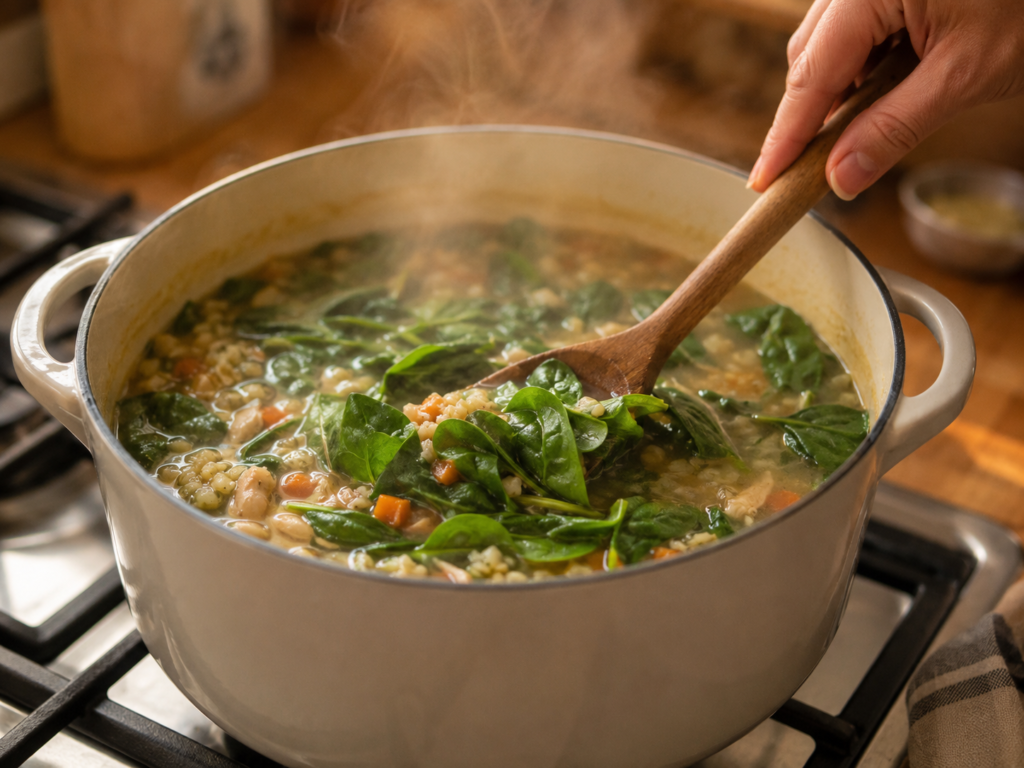
Soup is one of the most forgiving places to use spinach. Even if the leaves are no longer salad-worthy, they can still be excellent in a pot of soup if they are not spoiled.
Add spinach at the end of cooking. It only needs a short time to wilt. This works in chicken noodle soup, lentil soup, tomato soup, white bean soup, minestrone, potato soup, and tortellini soup.
Spinach is especially good in soups with beans because the beans make the meal filling while the spinach adds freshness. Try broth, canned white beans, garlic, onion, diced tomatoes, Italian seasoning, and a few handfuls of spinach. Simmer everything except the spinach until hot, then stir in the leaves at the end.
This is also a good way to use the last two cups in the bag. Two cups may not make a salad for the family, but it can improve a whole pot of soup.
Rescue Meal 4: Green Smoothies Without the “Lawn Clipping” Taste
Spinach is popular in smoothies because it blends easily and has a mild flavor compared with stronger greens. But there is a right way to do it.
Use fresh spinach that still smells clean. Do not use spinach that is slimy or questionable just because it is going into a blender. Blenders are not magic food safety machines. Sorry, but they are not.
For a basic smoothie, blend spinach with banana, frozen berries, yogurt, milk, or a splash of orange juice. Banana helps smooth out the flavor. Berries help with color. Yogurt adds body. If you are new to green smoothies, start with a small handful of spinach rather than packing the blender full.
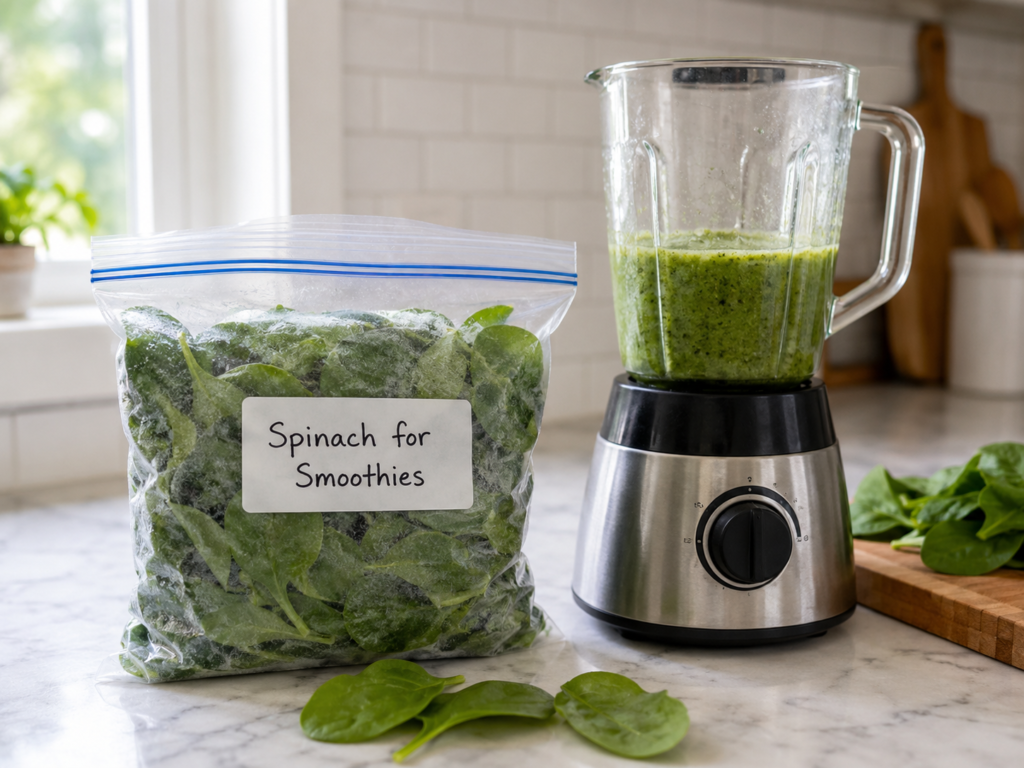
Spinach can also be frozen for smoothies. Place clean, dry spinach in a freezer bag, press out extra air, and freeze. The texture will not be good for salads after freezing, but it will be fine for smoothies, soups, and cooked dishes.
Smoothie Formula
| Ingredient | Mild Starter Amount |
|---|---|
| Spinach | 1 packed cup |
| Banana | ½–1 banana |
| Frozen fruit | 1 cup |
| Yogurt | ½ cup |
| Milk or juice | ½–1 cup |
| Optional add-ins | Peanut butter, chia seeds, oats |
Rescue Meal 5: Spinach Rice Bowls, Grain Bowls, and Skillet Meals
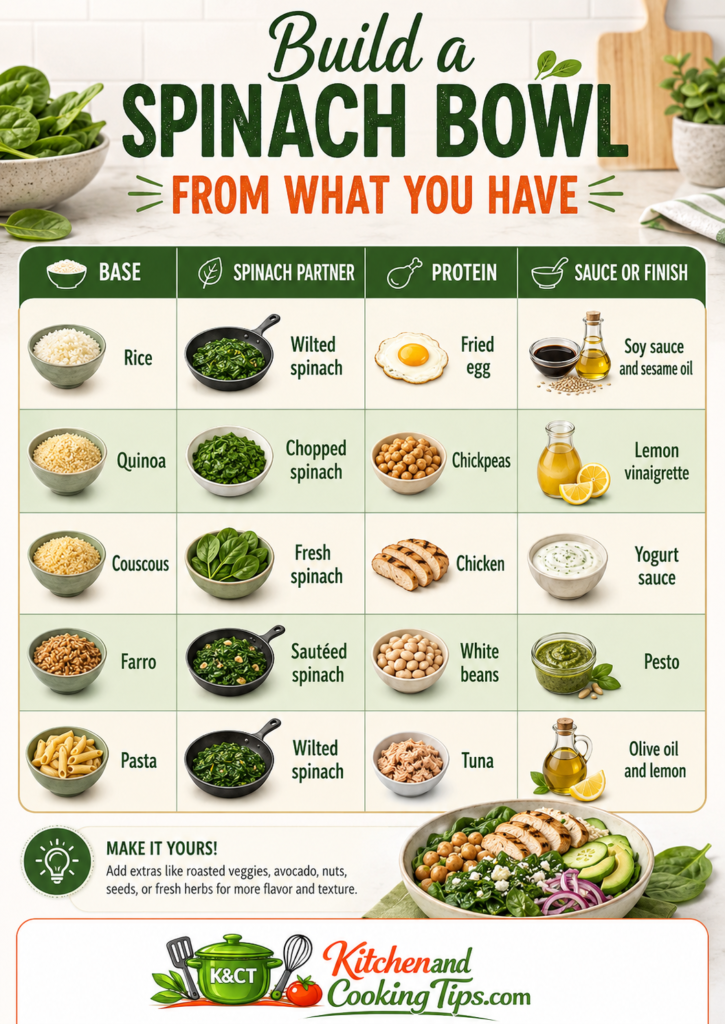
Spinach is useful when you have leftover rice, quinoa, couscous, farro, or any cooked grain that needs help becoming dinner.
Start with a skillet. Add a little oil, garlic, and spinach. Cook until the spinach wilts, then add your cooked grain. Season with soy sauce, lemon juice, salsa, curry powder, taco seasoning, or a spoonful of pesto. Add protein if you have it.
This is where the Use-It-Up Kitchen really works. Leftover rice plus spinach plus one egg becomes a meal. Quinoa plus spinach plus chickpeas becomes a bowl. Couscous plus spinach plus feta becomes lunch. It does not have to be complicated to count.
Spinach also works in skillet meals with beans. Sauté garlic and spinach, add canned chickpeas or white beans, then finish with lemon and a little olive oil. Serve it over toast, rice, or pasta. It is simple, but it gets the job done.
Rescue Meal 6: Spinach Wraps, Quesadillas, and Sandwiches
When the spinach is still fresh enough to eat raw, use it where you would normally use lettuce. It works in turkey wraps, chicken salad sandwiches, tuna melts, breakfast wraps, veggie sandwiches, and quesadillas.
For wraps, dry spinach matters. Wet leaves make tortillas soggy. Layer spinach between drier ingredients, then add sauce lightly. If you are packing lunch, keep dressing or sauce separate when possible.
For quesadillas, spinach should be wilted first or chopped finely and used sparingly. Too much raw spinach inside a quesadilla can release water and make the tortilla soft. A quick sauté solves that problem.
Spinach also works well in grilled cheese. Add a small handful with cheddar, mozzarella, or provolone. It is not suddenly a health food miracle, but it is a smart way to use what you bought. And sometimes that is enough.
Rescue Meal 7: Spinach Pesto or Green Sauce
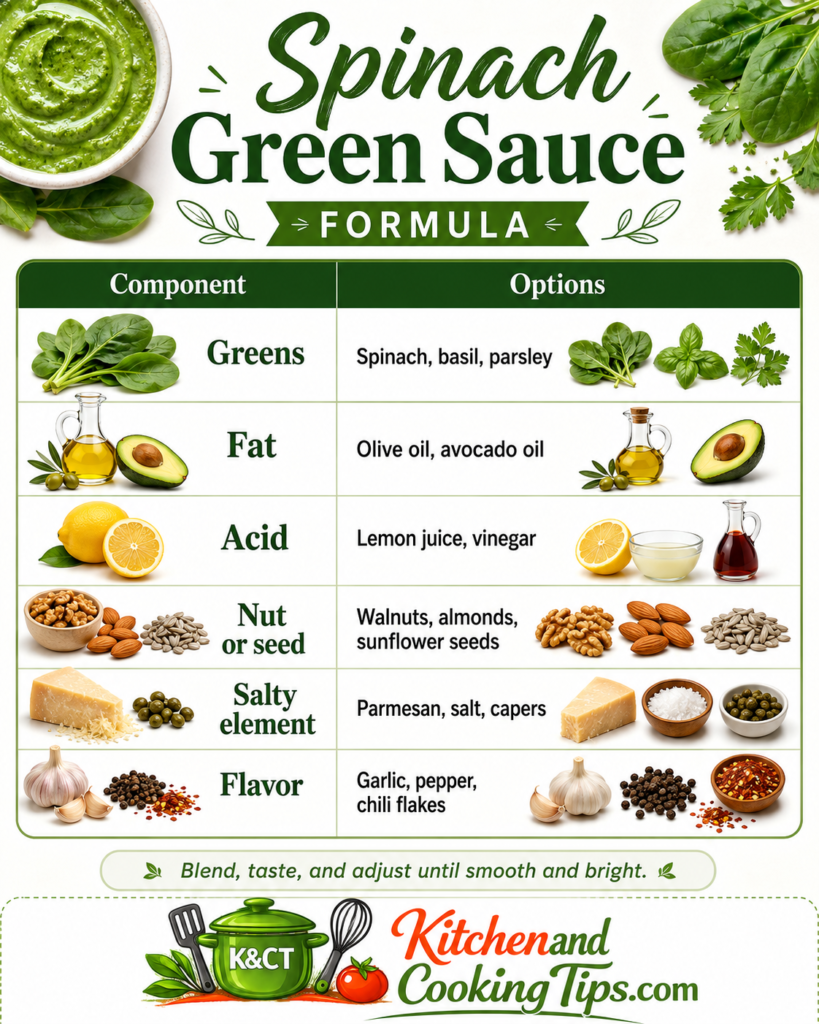
If the bag is still good but you know you will not finish it in time, turn spinach into sauce.
Spinach pesto is flexible. Blend spinach with olive oil, garlic, lemon juice, nuts or seeds, Parmesan if you have it, salt, and pepper. Basil is nice but not required. Walnuts, almonds, sunflower seeds, or even pumpkin seeds can work.
Use the sauce on pasta, sandwiches, eggs, roasted vegetables, chicken, fish, rice bowls, or toast. Freeze it in small portions if you want to stretch it further. Ice cube trays work well for this. Once frozen, transfer the cubes to a freezer bag.
The best part is that sauce uses a lot of spinach at once. That half-bag that looked like a problem can become several future flavor boosts.
Storage and Safety Note: Know When to Cook, Freeze, or Toss
Fresh spinach should be kept refrigerated, and cut or prepared produce should not sit out at room temperature for long periods. FDA safe food handling guidance recommends refrigerating or freezing perishables within two hours, or within one hour when the temperature is above 90°F.
If you cook spinach into a dish, treat it like other leftovers. USDA guidance says refrigerated leftovers should generally be used within three to four days, and reheated leftovers should reach 165°F as measured with a food thermometer.
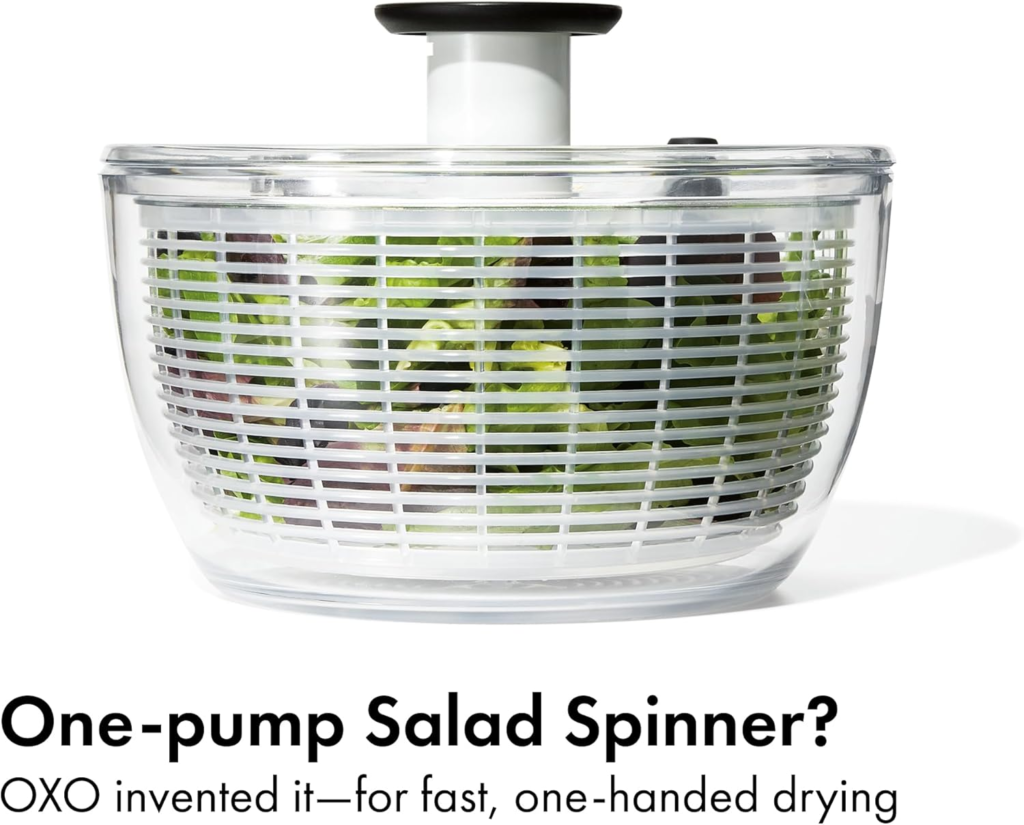
Easy One Handed Operation, Non-Slip Ring and Clear Flat Lid that allows for convenient Stacking of the OXO Good Grips Salad Spinner
Check current prices at Amazon
For raw spinach, use your senses and common sense. Fresh spinach should not smell sour, feel slimy, or look mushy. Remove a few damaged leaves if the rest of the bag is still fine, but do not try to rescue a bag that has turned wet and unpleasant throughout.
If you need to freeze spinach, do it before it gets bad. Freezing does not improve dying spinach. It simply pauses spinach that is still usable.
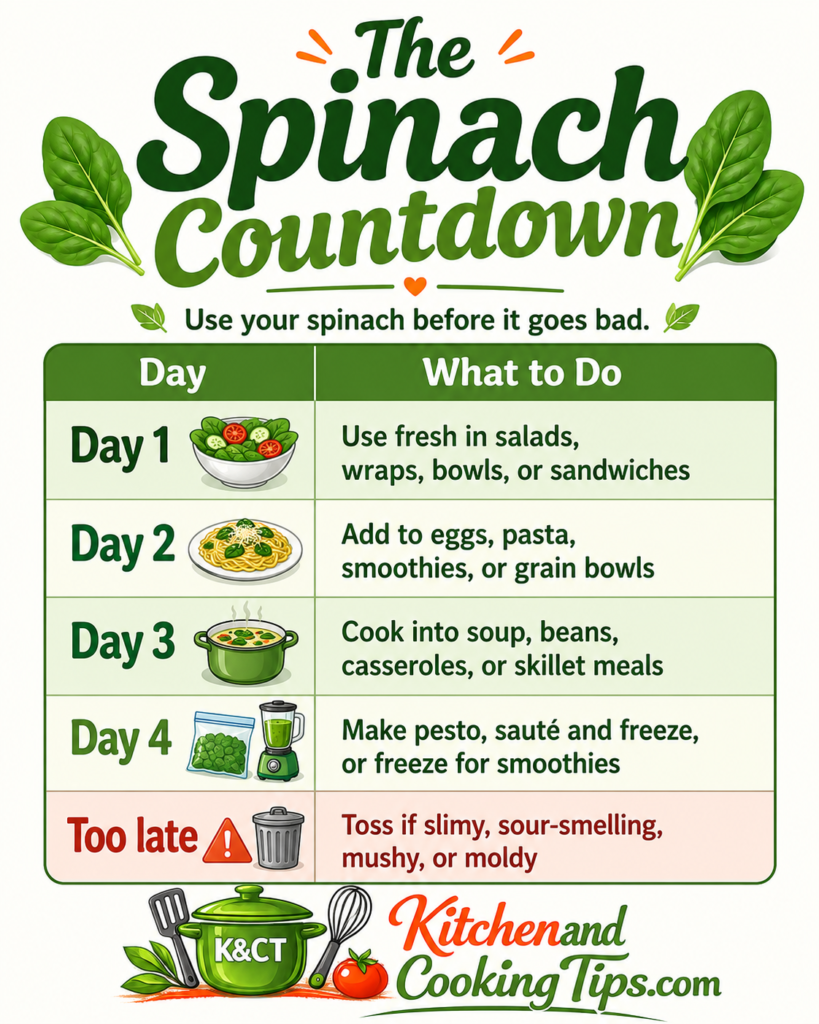
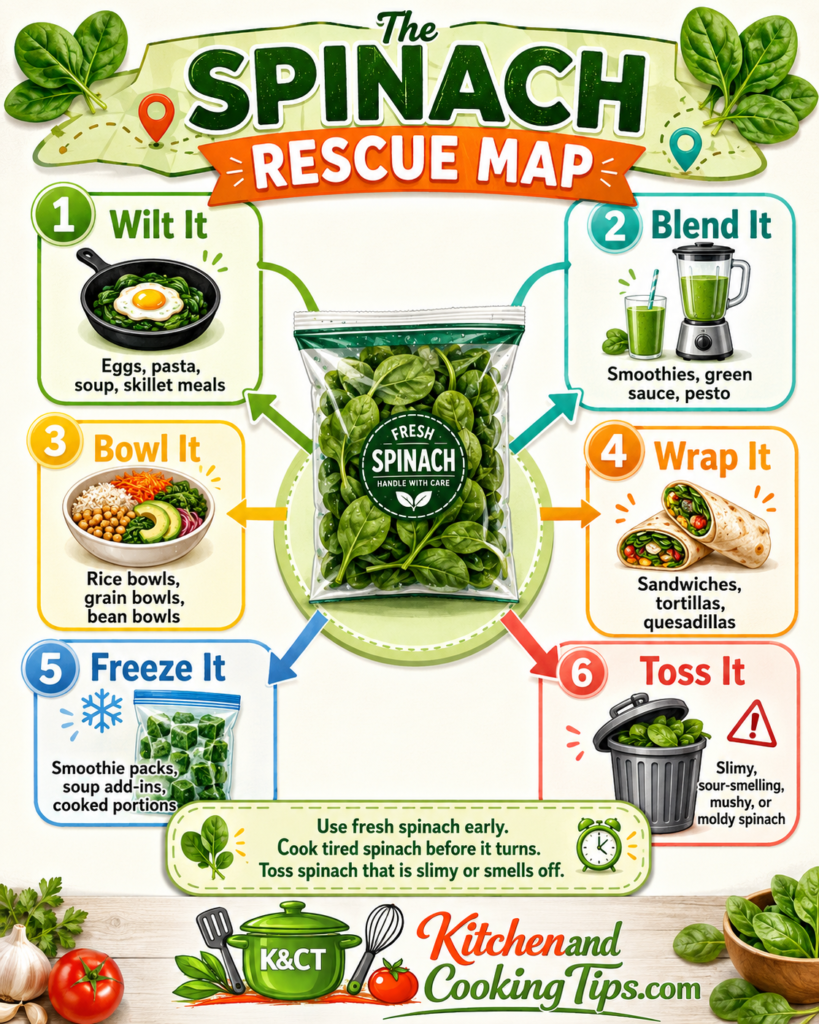
Spinach Use-It-Up Timeline
Practical Spinach Meal Ideas
Practical Spinach Meal Ideas
A simple guide to turn the spinach and pantry staples you already have into easy meal ideas.
| What You Have | What to Make |
|---|---|
| Spinach + eggs | Scramble, omelet, or frittata |
| Spinach + pasta | Garlic spinach pasta |
| Spinach + broth + beans | White bean spinach soup |
| Spinach + banana + berries | Green smoothie |
| Spinach + rice + egg | Spinach fried rice bowl |
| Spinach + tortillas + cheese | Spinach quesadilla |
| Spinach + chickpeas | Lemon garlic chickpea skillet |
| Spinach + pesto ingredients | Spinach green sauce |
| Spinach + canned tomatoes | Tomato spinach soup |
| Spinach + turkey | Lunch wrap or sandwich |
Final Thoughts: Spinach Needs a Job Before It Needs a Funeral
Spinach is easy to waste because it feels like it should last longer than it does. You buy it with good intentions, tuck it into the fridge, and assume you have time.
Sometimes you do. Sometimes you really do not.
The fix is not to stop buying spinach. The fix is to give it a job early. Use the freshest leaves in salads, wraps, and bowls. Move the slightly tired leaves into eggs, pasta, soup, and skillet meals. Blend the rest into smoothies or green sauce. Freeze what you cannot use in time.
And when the bag has gone too far, toss it and learn from it. That counts too.
The heart of The Use-It-Up Kitchen is not perfection. It is paying attention. A handful of spinach in eggs, a few cups stirred into soup, a quick green sauce before the leaves turn — these are small kitchen wins. They save money, reduce waste, and make dinner a little easier.
That is enough for one weeknight.